
Aluminum is the most widely used material for CNC machining prototypes and low-volume parts due to high strength-to-weight ratio, easy cutting and good surface finishing. This handbook covers common aluminum grades, machinability, tolerance, anodizing options, minimum feature rules and DFM guidance for custom aluminum CNC components.
Definition
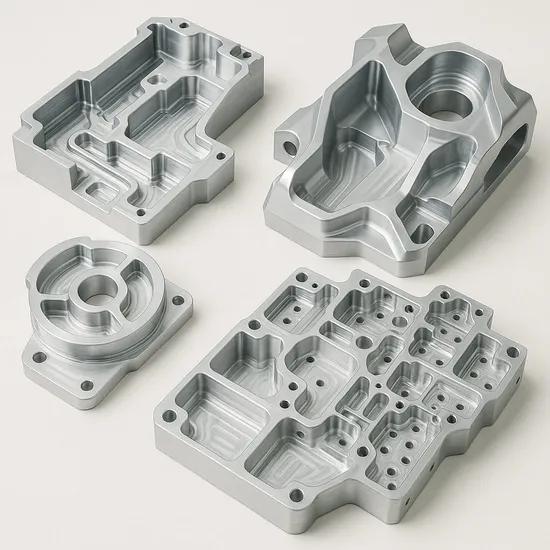
Aluminum CNC machining is a subtractive manufacturing process that uses computer-controlled cutting tools to remove material from solid aluminum stock to create custom parts with controlled dimensions, tight tolerances and consistent surface quality. It is one of the most popular manufacturing routes for prototype and low-volume metal components, balancing light weight, easy machinability and flexible post-treatment options.
Engineers commonly use this process for milling, turning, drilling, tapping and pocketing. Alloy selection is the foundational step; widely used grades include 6061, 7075, 5052 and 2024. Each grade delivers distinct tensile strength, corrosion resistance and cutting behavior, so material choice must match operating conditions instead of prioritizing ease of machining alone.
How It Works
The aluminum CNC workflow follows a structured sequence to control burr formation, thermal expansion and dimensional drift:
- CAD development: Finalize part geometry, mating interfaces, hole patterns, threads and tolerance callouts
- CAM programming: Generate optimized toolpaths, set spindle speeds and chip load parameters
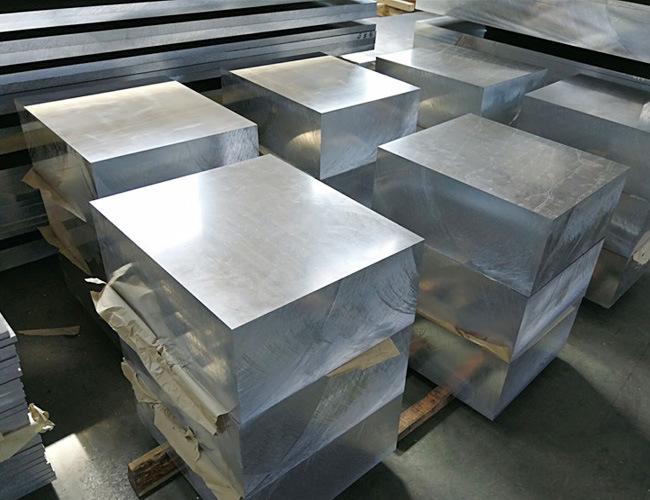
- Stock preparation: Cut aluminum billet or plate to blank size and secure it with rigid fixturing
- CNC cutting: Single or multi-axis machines remove material; 5-axis setups reduce re-clamping for complex profiles
- Secondary operations: Deburr edges, ream holes and tap threads after rough and finish passes
- Dimensional inspection & surface finishing: Verify critical dimensions; apply optional anodizing, bead blast or conversion coating
Aluminum dissipates heat rapidly, yet localized high cutting heat can trigger built-up edge on cutting tools and thermal expansion. Stable coolant delivery and proper chip evacuation are essential to hold consistent accuracy.
Key Parameters
Core factors governing cycle time, part quality and cost: aluminum alloy grade, cutting speed, feed rate, wall thickness, tolerance and surface roughness.
表格
| Factor | Aluminum CNC Machining | Steel CNC Machining |
|---|---|---|
| Machinability | Excellent, high material removal rate | Slow, higher tool wear |
| Thermal expansion | Higher; heat impacts tight tolerances | Lower thermal expansion |
| Weight | Low density, lightweight parts | Heavy, high structural rigidity |
| Common tolerance | ±0.05~0.10 mm for standard features | Stable ±0.03~0.08 mm typical |
| Finishing options | Rich anodizing, blasting, polishing choices | Limited coating & cosmetic options |
| Typical cost | Lower machining time, moderate raw cost | Longer cycle time, higher processing cost |
These figures serve as baseline references. Actual results vary by machine rigidity, cutter quality, fixturing design and part geometry.
Pros & Cons
✅ Advantages
- Low density, ideal for weight-critical aerospace, e-bike and automation assemblies
- Excellent machinability, fast cutting speeds shorten prototype lead time
- High thermal conductivity, perfect for custom heat sink designs
- Wide range of surface finishing options for corrosion protection and cosmetic needs
- Balanced strength for most non-extreme load prototype applications
❌ Limitations
- Not suitable for high-wear scenarios compared to hardened steel
- Prone to thermal expansion; precision assemblies need temperature compensation
- Soft surface is easy to scratch, gall or dent under sliding contact
- Thin ribs and slender walls tend to vibrate and deform during cutting
- Anodizing adds a material layer, which shifts final dimensions of tight tolerance features
Hybrid planning is recommended: machine the core geometry first, then reserve allowance for surface coating.
Typical Applications
- Aerospace: Lightweight brackets, instrument housings, test-fit structural fittings
- Medical equipment: Equipment frames, fixture bases, surgical device housings (non-implant)
- Industrial automation: Robot end effectors, sensor mounts, pneumatic manifolds, alignment jigs
- E-bike & mobility: Motor casings, battery brackets, controller shells and lightweight structural mounts
- Product R&D: Functional aluminum prototypes for fit testing, performance validation and small batch trial runs
We produce custom aluminum CNC prototypes and precision aluminum parts, with full secondary finishing support for low-volume development projects.
Design & Machining Tips
- Lock in aluminum grade at the early DFM stage, match alloy strength and corrosion resistance to your working environment
- Add reasonable radii to all internal corners; tiny corner radii demand small end mills and raise tool wear & cost
- Avoid ultra-thin walls; add reinforcing ribs if stiffness is required to suppress vibration
- Only assign tight tolerances to mating, sealing or bearing surfaces; leave non-critical features loose
- Keep deep cavities and narrow slots accessible for cutting tools; deep hard-to-reach features increase cost
- Mark thread standards and engagement depth clearly on drawings to prevent thread stripping
- Reserve coating stock allowance if you plan anodizing or surface treatment after machining
- Submit 3D files plus 2D tolerance drawings together to avoid quotation and inspection misunderstandings
Working with a supplier that handles both CNC machining and post-finishing streamlines prototype development and reduces coordination errors. Early DFM review helps you cut scrap and shorten lead time.
FAQ
Q: 6061 vs 7075 aluminum for CNC machining?
A: 6061-T6: easy to machine, stable, good for anodizing, general-purpose. 7075-T6: much higher strength, harder to machine, higher cost, used for high-load aerospace and UAV parts.

Q: What minimum wall thickness for CNC aluminum?
A: 0.8 mm minimum is practical; 1.0 mm or thicker is preferred to avoid chatter and deformation.

Q: Can aluminum parts be threaded easily?
A: Yes, aluminum taps cleanly. Use proper lubrication to reduce galling.

Q: What surface finishes are available for CNC aluminum?
A: As-machined, bead blast, brushed, anodizing, clear coating, powder coating.


