
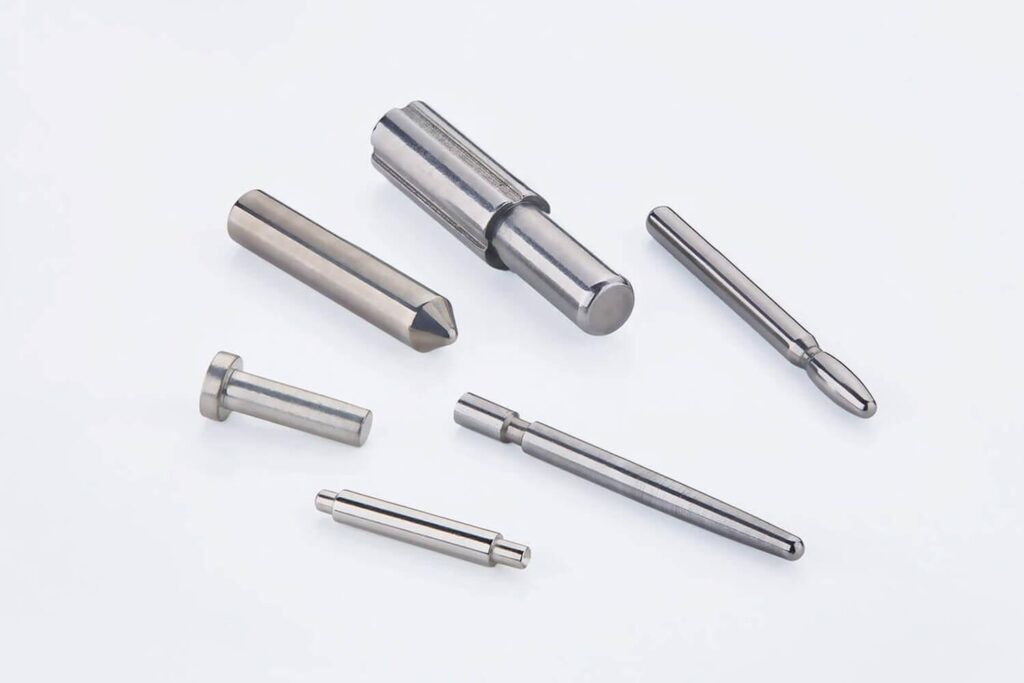
Swiss CNC turning excels at small, slender precision parts that are difficult to produce on standard lathes. It supports bar stock right next to the cutting zone to minimize deflection and maintain stable machining, making it ideal for medical pins, sensor fittings, micro shafts and other tiny high-tolerance turned components.
For mechanical engineers and procurement teams, choosing between Swiss turning and conventional turning depends on part geometry, material, tolerance, surface finish and order volume.
Definition
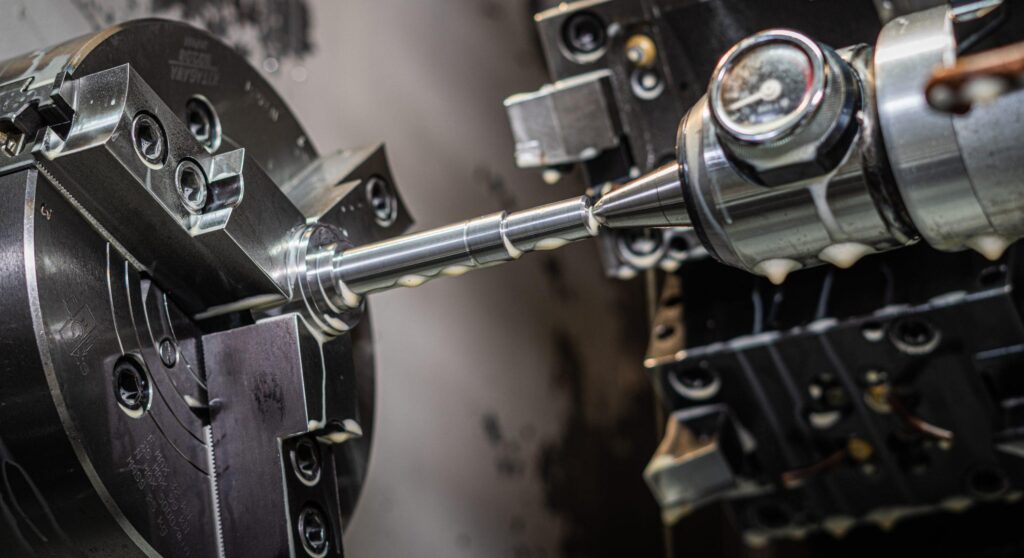
Swiss CNC turning is a precision subtractive machining process that uses a sliding headstock to feed bar stock through a guide bushing. Cutting tools machine the part very close to this guide bushing, which supports the material near the cutting point.
Unlike standard CNC lathes that clamp the workpiece in a chuck, Swiss machines feed the bar through the guide bushing as cutting proceeds. This keeps the unsupported section of the workpiece extremely short, greatly reducing vibration and bending.
It is best for small-diameter parts with high length-to-diameter ratios, fine features and strict dimensional requirements. Most Swiss lathes come with live tooling, so turning, drilling, milling and cross-hole work can be finished in a single setup.
How It Works
Raw bar stock is loaded through the spindle and guide bushing. The sliding headstock advances the bar to the cutting position. All cutting happens close to the bushing for rigid support.
Standard workflow:
- Material preparation: Select straight bar stock matched to guide bushing size
- Bar feeding: Feed stock through spindle and guide bushing
- Rough turning: Remove excess material while keeping stable support
- Finish machining: Create final diameters, shoulders, grooves and threads
- Secondary operations: Live tooling for cross holes, flats, slots and milled features
- Inspection: Check critical dimensions, concentricity and surface finish
One setup can complete multiple operations, cutting rework and repeated fixturing errors.
Key Parameters
表格
| Parameter | What to consider | Manufacturing impact |
|---|---|---|
| Bar diameter | Match stock to guide bushing and spindle capacity | Determines feeding stability and support |
| Guide bushing clearance | Tuned to bar diameter and material | Controls runout and surface quality |
| Cutting speed | Adjust by alloy and insert grade | Impacts heat generation and tool life |
| Feed rate | Balance chip control and surface finish | Affects cutting force and burr formation |
| Tool geometry | Use sharp, properly prepared inserts | Reduce burrs and improve consistency |
| Length-to-diameter ratio | Assess part slenderness | Main risk factor for deflection |
| Tolerance stack-up | Lock datums and critical features | Guides inspection and process validation |
For micro precision parts, minor variations in bar straightness, tool wear or setup will easily ruin consistency. Always validate with sample runs.
Pros & Cons
✅ Advantages
- Minimizes deflection for long, thin small-diameter parts
- Excellent concentricity and repeatability
- Multi-operation single setup with live tooling
- Stable for fine features and tight tolerances
⚠️ Limitations
- Higher setup cost than conventional turning
- Reliant on properly sized guide bushings
- Bar straightness is critical; not fit for oversized or simple short parts
- Bar remnant waste and longer setup time for low mix orders
Typical Applications
- Medical devices: Surgical pins, bone screws, instrument shafts and small implant components
- Industrial automation: Miniature shafts, valve cores, positioning pins and small connectors
- Sensors & electronics: Probe fittings, contact pins, threaded micro housings
- Aerospace: Small fluid fittings, tiny fasteners and precision interface parts
- E-mobility: Compact adjuster pins and small mechanical fittings
These components commonly demand tight concentricity, clean edges and consistent surface finish.
Design & Machining Tips
First confirm whether your part actually needs Swiss turning. Long thin small-diameter parts benefit most; short, stocky turned parts are usually cheaper on regular CNC lathes.
Keep critical features tool-accessible. Avoid ultra-narrow deep grooves or tiny internal features unless functionally required. Only apply tight tolerances to functional surfaces instead of every dimension.
Material selection changes the whole cutting strategy. Stainless steel, aluminum and brass all need different inserts and parameters. Clearly specify surface finish requirements for sealing, sliding and mating surfaces.
We recommend a DFM review before production. At XTJ CNC, we support low-volume custom prototypes and precision Swiss turned parts. Our team reviews drawings, tolerance chains and application requirements before formal production.
FAQ
What is the difference between Swiss turning and regular CNC turning?
The core difference is workpiece support. Swiss turning uses a sliding headstock + guide bushing to support the bar right beside the cutting edge. Standard lathes hold parts in a chuck. Swiss turning is preferred for slender small parts, while conventional turning works better for larger or shorter components.
What parts are best suited to Swiss CNC turning?
Medical pins, sensor fittings, micro shafts, small connectors and slender components with tight tolerances. The final process selection still needs to consider size, material, tolerance and quantity.
Can Swiss turning produce tight-tolerance micro parts?
Yes. Swiss lathes are built for micro precision, but achievable tolerance depends on material stability, machine condition, tooling, setup and inspection. Critical dimensions should be verified with samples.


