
Introduction
CNC machining fixture design plays an important role in part accuracy, production consistency, and manufacturing efficiency. A fixture locates, supports, and secures a workpiece during machining, helping maintain its position under cutting forces.
Poor workholding can cause part movement, vibration, deformation, dimensional variation, and unnecessary setup time. These problems become particularly costly when manufacturing precision components or repeating small-batch orders.
For mechanical engineers and sourcing managers, understanding fixture design basics helps improve manufacturability and evaluate CNC suppliers more effectively.
1. What Is CNC Machining Fixture Design?
A CNC machining fixture is a dedicated or modular workholding device used to position and secure a component during milling, drilling, turning, or other machining operations.
Unlike a jig, which can guide a cutting tool, a fixture primarily controls workpiece positioning and stability.
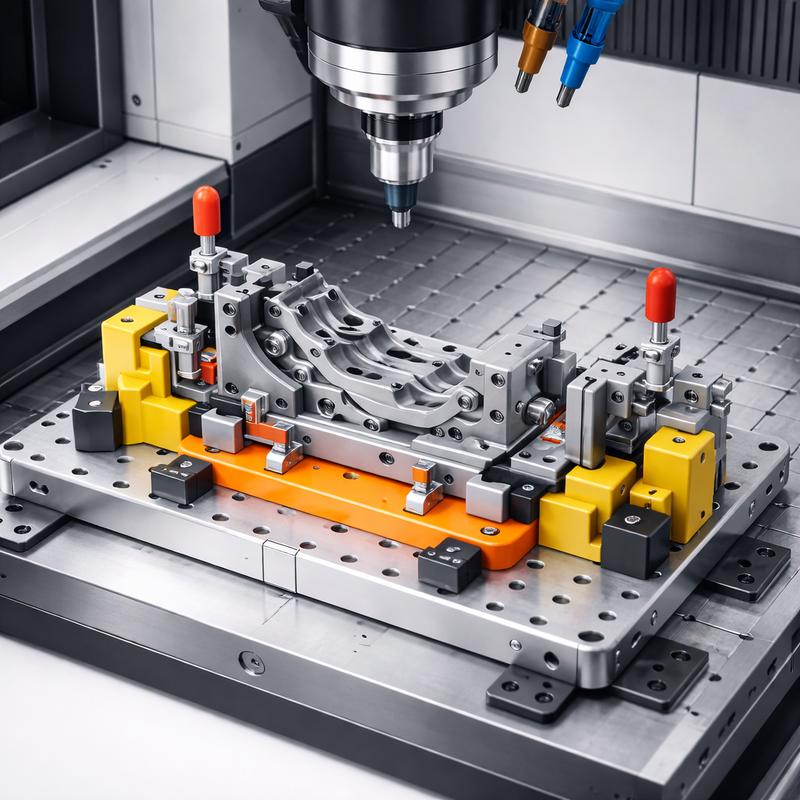
A typical fixture consists of:
- Base plate: Provides the main mounting structure.
- Locating elements: Establish the workpiece position and orientation.
- Clamping components: Hold the workpiece against the locators.
- Support elements: Prevent deformation under machining forces.
- Fasteners: Secure fixture components to the machine table or fixture base.
<AsyncImage ref=”turn696090image0″ aspectRatio=”16:9″ width=”100%” shop_eligible={false}/>
The objective is to achieve repeatable positioning while providing sufficient rigidity and tool accessibility throughout the machining cycle.
2. Fundamental Principles of Fixture Design
Effective fixture design starts with three requirements: locating, supporting, and clamping.
The 3-2-1 locating principle
The 3-2-1 method is widely used to position rigid workpieces by restricting their six degrees of freedom:
- Three contact points establish the primary datum plane.
- Two locating points establish the secondary plane.
- One locating point establishes the tertiary plane.
This arrangement controls translation and rotation while avoiding unnecessary constraints. <Cite refs={[“turn696090search0″,”turn696090search2”]}/>
Clamping force distribution
Clamps must hold the component securely without causing excessive deformation. Clamping forces should generally act toward the locating surfaces and be supported by sufficiently rigid fixture elements.
Structural rigidity
The fixture must withstand cutting forces without excessive deflection or vibration. Thin-walled components may require additional support points or specially designed contact surfaces.
Tool accessibility
Clamps and locating elements should not obstruct cutting tools, coolant delivery, chip evacuation, or workpiece loading.
3. Common Workholding Methods for CNC Machining
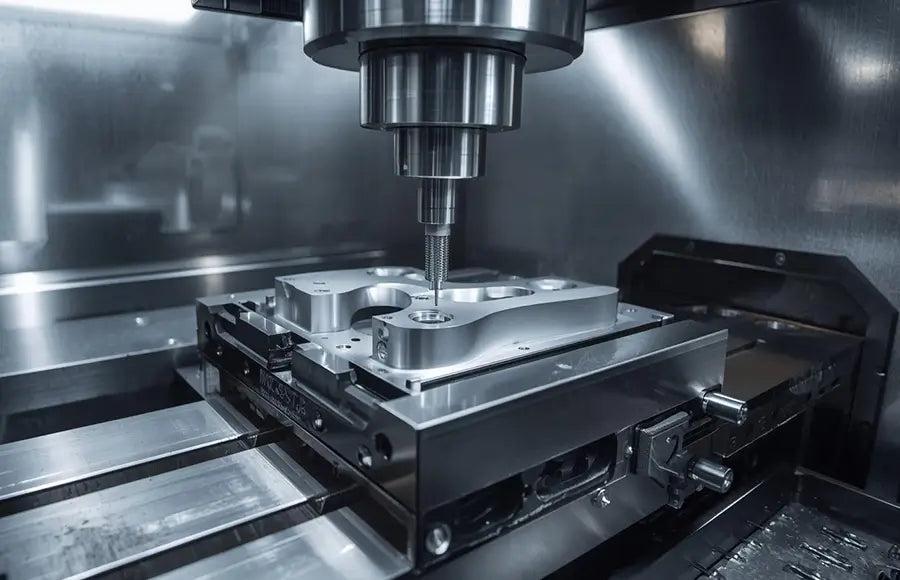
The appropriate workholding method depends on part geometry, production quantity, machining operations, and tolerance requirements.
| Workholding method | Typical application | Main advantage |
|---|---|---|
| CNC vise | Rectangular components | Simple setup |
| Soft jaws | Custom-shaped parts | Flexible positioning |
| Modular fixtures | Small and medium batches | Reusable configuration |
| Dedicated fixtures | Repeat production | Consistent positioning |
| Vacuum fixtures | Thin plates and panels | Distributed holding force |
| Hydraulic fixtures | Production machining | Consistent clamping force |
<AsyncImage ref=”turn696090image2″ aspectRatio=”16:9″ width=”100%” shop_eligible={false}/>
For small-batch production, modular fixtures and customized soft jaws often provide a practical balance between setup flexibility and investment cost. Dedicated fixtures become more attractive when part designs and production volumes justify the tooling expense.
4. Materials Used in Custom CNC Fixtures
Fixture material selection affects rigidity, durability, weight, and manufacturing cost.
Common choices include:
- Aluminum: Lightweight and relatively easy to machine. Suitable for many prototype fixtures and general-purpose workholding systems.
- Steel: Offers high strength, stiffness, and wear resistance. Commonly used for heavy-duty fixtures and locating components.
- Tool steel: Suitable for hardened locating pins, contact surfaces, and components exposed to repeated wear.
- Engineering plastics: Useful for soft contact surfaces and fixtures handling delicate or easily scratched components.
Material selection should consider machining loads, expected production volume, contact pressure, and maintenance requirements.
5. How Fixture Design Affects Accuracy and Production Costs
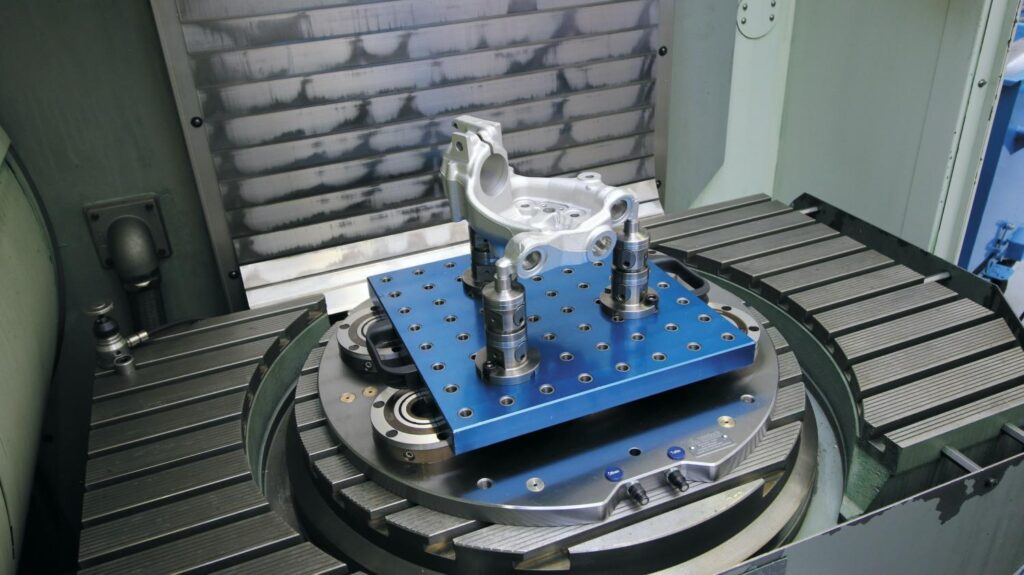
Poor fixture design can undermine the accuracy of even a capable CNC machine.
Inconsistent locating, worn contact surfaces, excessive clamping pressure, and insufficient support can introduce dimensional variation between parts.
Fixture design also affects manufacturing costs through:
- Setup time: Repeatable positioning reduces manual alignment and measurement.
- Scrap rates: Stable workholding reduces movement and machining-related defects.
- Cycle efficiency: Multi-part fixtures can improve machine utilization.
- Tool accessibility: Better fixture layouts reduce unnecessary tool changes and setup adjustments.
- Maintenance: Durable locating and clamping components reduce replacement frequency.
For projects requiring custom CNC fixture and prototype machining, fixture design should be reviewed alongside the component drawing, machining sequence, and expected production quantity.
6. Practical Tips for Better Fixture Design
Engineers and buyers can improve workholding performance through several practical steps:
- Review part geometry: Identify suitable datum surfaces and stable clamping locations before designing the fixture.
- Minimize setups: Consider whether multiple machining operations can be completed in one fixture.
- Avoid deformation: Apply clamping forces near supported areas, particularly on thin-walled components.
- Allow chip clearance: Prevent chips from accumulating between locating surfaces and the workpiece.
- Check tool clearance: Verify that clamps do not interfere with toolpaths or create collision risks.
- Consider production volume: Compare modular and dedicated fixture costs against expected quantities.
- Plan repeatability checks: Inspect locating surfaces and fixture condition during production.
Before approving a custom fixture, request a setup review or trial run to verify positioning, accessibility, and dimensional repeatability.
7. Frequently Asked Questions
How does fixture design affect CNC part accuracy?
Fixture design controls workpiece positioning, rigidity, and clamping stability. Poor locating or excessive clamping force can cause movement, deformation, and dimensional variation.
What materials are commonly used for CNC machining fixtures?
Aluminum, steel, tool steel, and engineering plastics are common choices. Selection depends on required rigidity, wear resistance, weight, and production conditions.
Can custom fixtures reduce machining setup time?
Yes. Custom fixtures can establish repeatable positioning, reduce manual alignment, and simplify loading and unloading, particularly in repeat production.
Conclusion
CNC machining fixture design directly influences dimensional accuracy, production consistency, and manufacturing efficiency. Proper locating, balanced clamping, structural rigidity, and tool accessibility are essential for reliable workholding.
For buyers, evaluating fixture design during the quotation and manufacturing review process can help identify production risks early. The right workholding strategy should match part geometry, tolerance requirements, production volume, and overall manufacturing cost.


