
Introduction
Robotic arms are widely used in industrial automation, assembly, material handling, and precision manufacturing. Their performance depends on the strength, accuracy, and weight of individual mechanical components.
CNC machined robotic arm parts offer excellent dimensional accuracy, repeatability, and design flexibility. However, engineers must consider structural rigidity, material selection, weight optimization, and machining feasibility to achieve reliable performance.
This article introduces several important design tips for developing high-quality robotic arm components.
1. Understand the Main Robotic Arm Components
Different robotic arm components perform different mechanical functions and have specific manufacturing requirements.
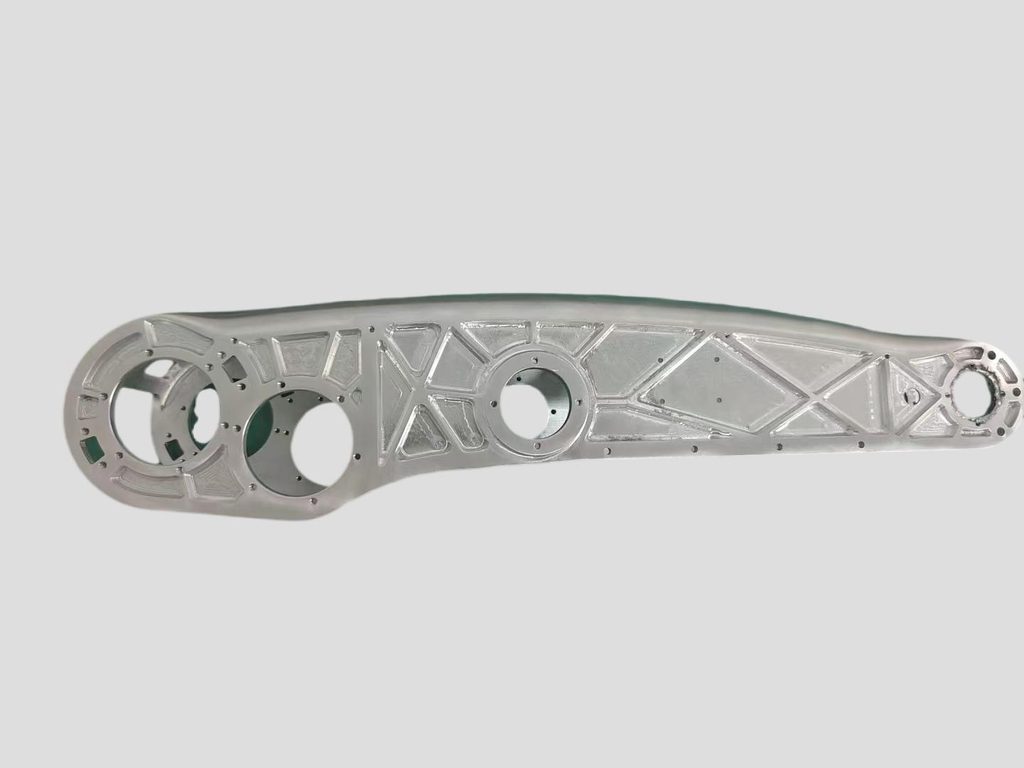
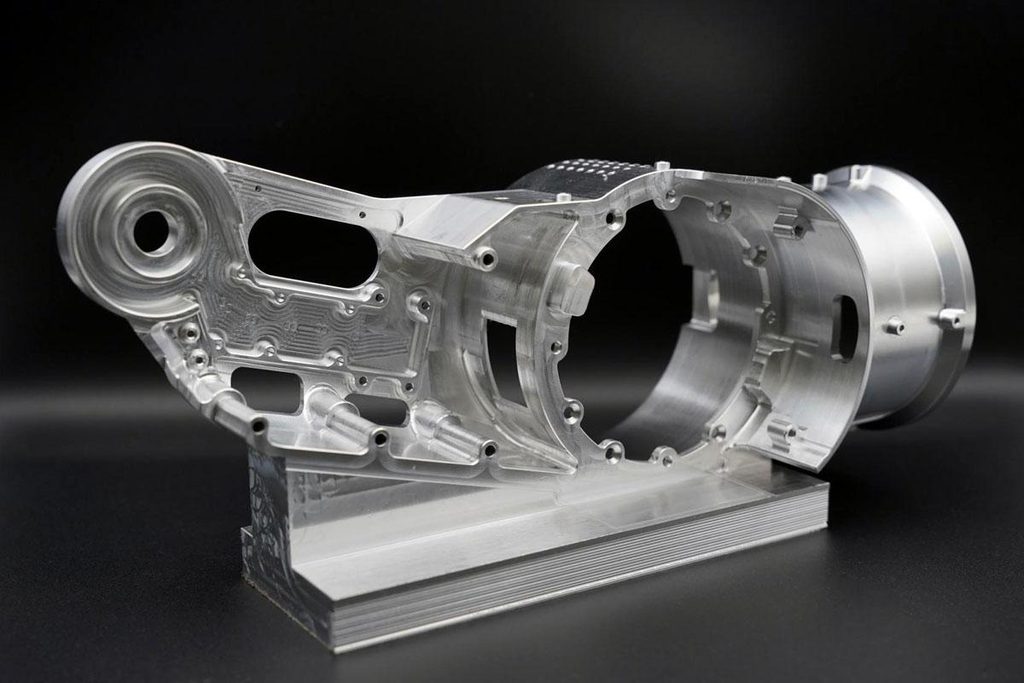
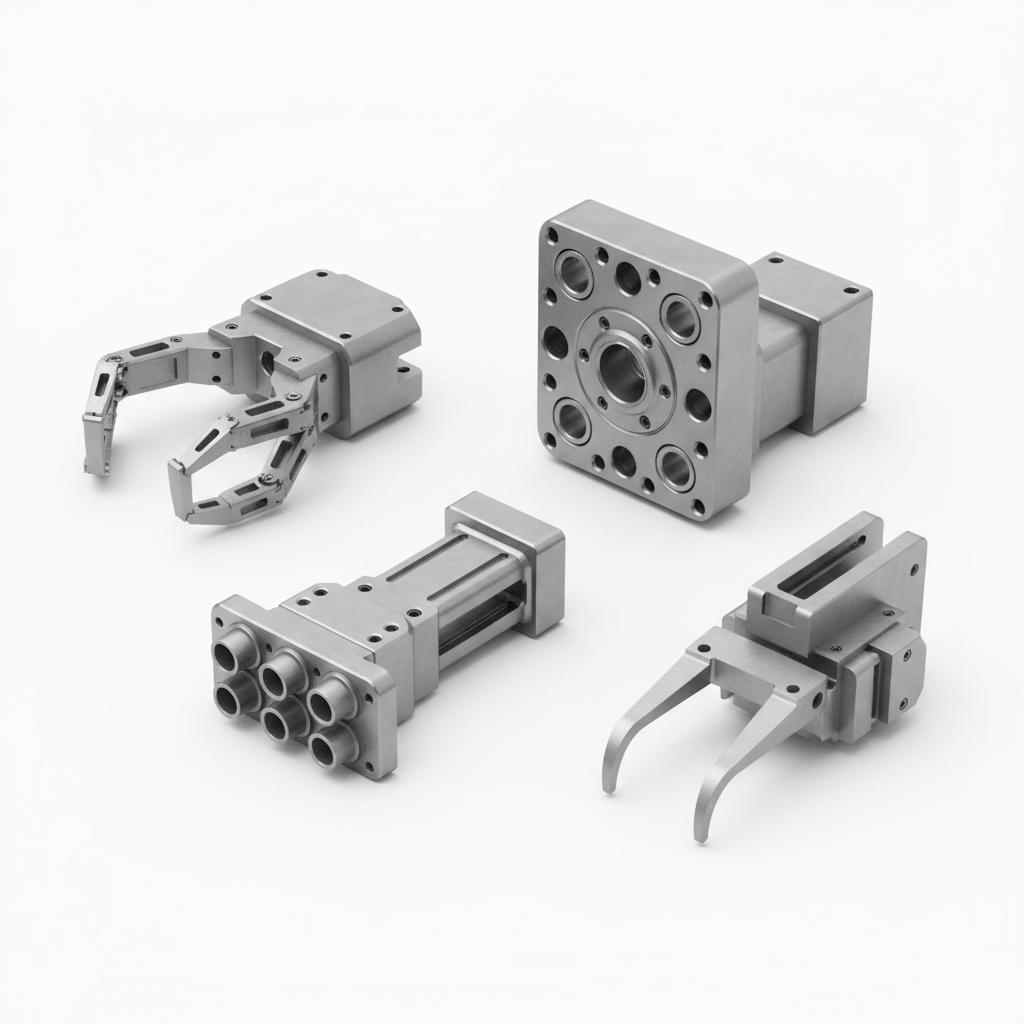
Common CNC machined components include:
- Arm links: Connect joints and support mechanical loads.
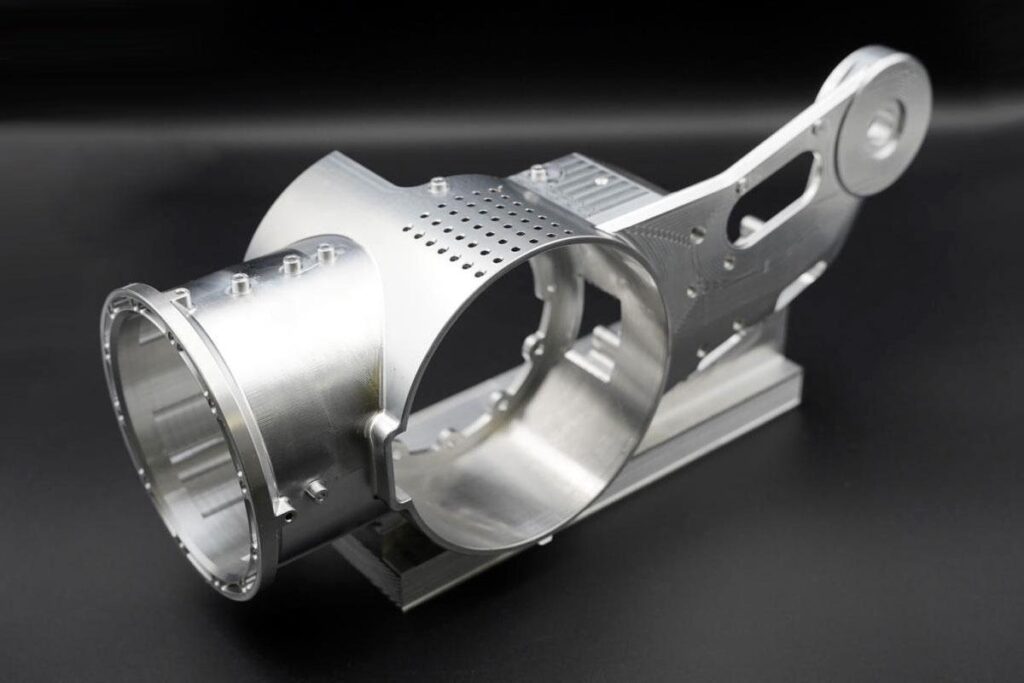
- Joint housings: Hold bearings, motors, and transmission systems.
- Mounting brackets: Connect structural and actuator components.
- End-effector parts: Support gripping, positioning, and handling operations.
- Shafts and pins: Provide rotational movement and mechanical connections.
Understanding each component’s function helps determine its geometry, material, and tolerance requirements.
2. Choose Suitable Materials
Material selection directly affects component weight, strength, machining cost, and service life.
For lightweight robot arm machining, aluminum alloys are popular because of their low density and good machinability.
| Material | Main advantages | Typical applications |
|---|---|---|
| Aluminum 6061-T6 | Lightweight, machinable | Arm links, brackets |
| Aluminum 7075-T6 | High strength-to-weight ratio | Loaded structural parts |
| Stainless steel 304 | Corrosion resistance | Shafts, fixtures |
| Alloy steel 4140 | High strength and wear resistance | Pins, shafts |
| Titanium Ti-6Al-4V | High specific strength | Weight-critical components |
| PEEK | Lightweight, electrical insulation | Grippers, guides |
For general robotic structures, 6061-T6 is a practical choice. For highly loaded components, 7075-T6 or alloy steel may be more appropriate.
Material selection should consider actual loads, operating conditions, and manufacturing costs.
3. Optimize Strength and Weight
Reducing moving mass helps improve robotic arm acceleration, energy efficiency, and payload capacity. However, excessive material removal can reduce structural rigidity.
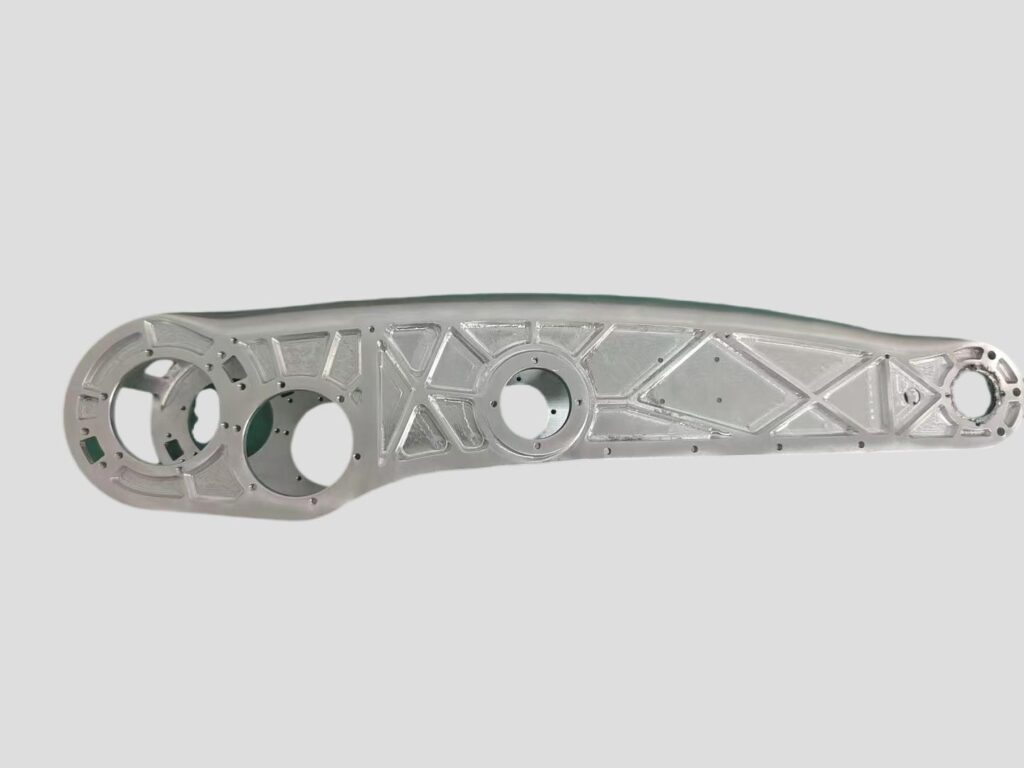
Consider these design strategies:
- Use hollow structures: Reduce unnecessary material while maintaining bending stiffness.
- Add reinforcing ribs: Improve rigidity without significantly increasing weight.
- Optimize pockets: Remove material from low-stress regions.
- Avoid sharp corners: Use suitable radii to reduce stress concentrations.
- Control weight distribution: Prioritize reducing mass near the wrist and end effector.
Finite element analysis (FEA) can help engineers identify high-stress areas and optimize material distribution before machining.
4. Design Precision Interfaces and Tolerances
Robotic arms rely on accurate connections between bearings, motors, reducers, and structural components.
Important features requiring careful tolerance control include:
- Bearing bores and mounting seats
- Motor mounting holes
- Shaft diameters and concentricity
- Positioning holes and locating pins
- Joint alignment surfaces
Use functional datums to establish machining references and avoid unnecessarily tight tolerances on non-critical surfaces.
Engineers should also consider tolerance stack-up because small dimensional deviations across multiple components can affect overall assembly accuracy.
5. Improve CNC Machinability
Good design for manufacturability (DFM) helps reduce machining time and production costs.
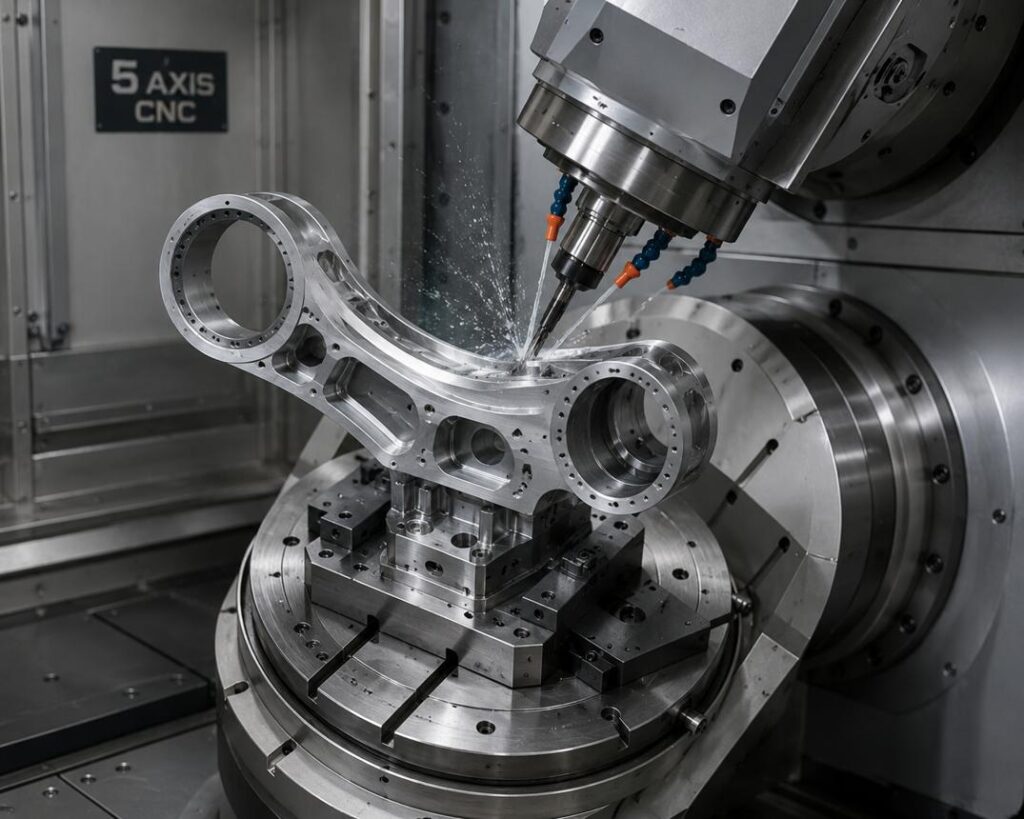
Practical recommendations include:
- Use standard internal corner radii compatible with common cutting tools.
- Avoid excessively deep and narrow pockets.
- Maintain sufficient wall thickness to prevent deformation.
- Provide adequate tool access for complex geometries.
- Simplify unnecessary features to reduce machining operations.
For complex robotic housings, 5-axis CNC machining can improve access to multiple surfaces and reduce repositioning. Simpler components may be more economical with 3-axis machining.
6. Consider Surface Finishing and Quality Inspection
Surface treatment improves corrosion resistance, wear performance, and component durability.
| Surface treatment | Typical applications |
|---|---|
| Anodizing | Aluminum housings and brackets |
| Hard anodizing | Wear-resistant aluminum interfaces |
| Electroless nickel plating | Precision mechanical components |
| Passivation | Stainless steel parts |
| Polishing | Contact and functional surfaces |
Quality inspection should verify critical dimensions, flatness, bore accuracy, and geometric tolerances. CMM inspection is particularly useful for complex robotic components.
Prototype testing under actual operating loads can further identify potential problems before mass production.
7. Choose a Reliable CNC Machining Supplier
A qualified supplier should have experience manufacturing precision mechanical components for automation applications.
Before selecting a manufacturer, evaluate:
- CNC milling and turning capabilities
- Experience with aluminum, steel, and titanium
- Dimensional inspection equipment
- Surface finishing capabilities
- Prototype and low-volume production flexibility
- Quality management and engineering support
For overseas buyers, communication efficiency and production consistency are also important.
Working with a supplier offering custom CNC machined robotic arm parts can help engineers evaluate material choices, machining feasibility, and production requirements.
Frequently Asked Questions
1. What design factors matter most for robotic arm CNC components?
The main factors include structural rigidity, strength-to-weight ratio, dimensional accuracy, fatigue resistance, and assembly compatibility. Engineers should also evaluate dynamic loads and joint alignment.
2. Which materials are preferred for lightweight robot arm parts?
Aluminum 6061-T6 and 7075-T6 are common choices. Titanium is suitable for specialized weight-critical applications, while PEEK works well for lightweight insulating components and guides.
3. How to balance strength and weight when designing robotic arm parts?
Use hollow structures, reinforcing ribs, and optimized pockets to remove unnecessary material. Maintain sufficient thickness around high-stress areas and use FEA to evaluate structural performance before production.


