
Modern automotive engineering calls for lightweight structures, tight dimensional tolerances, and consistent quality across prototyping and production runs. From electric vehicle powertrains to high-performance automotive assemblies, OEMs require parts that satisfy strict design specs without inflated machining costs. Automotive CNC machined parts deliver robust custom metal and plastic components with repeatable precision. For automotive engineers, OEM purchasers and procurement managers, CNC machining accelerates product development and enables flexible manufacturing of custom automotive components.
Why CNC Machining Is Critical for Automotive Manufacturing
CNC machining fabricates parts directly from CAD models and engineering drawings via computer-controlled cutting tools. It supports complex geometries, precision holes, accurate mating surfaces and consistent dimensions essential for automotive assemblies.
Design flexibility stands out as a core advantage. Engineers can update CAD files and produce revised components without expensive casting molds or dedicated production tooling. This makes CNC machining ideal for automotive prototype machining, custom vehicle builds and low-to-medium volume production.
This process also supports a broad range of materials: aluminum, stainless steel, alloy steel and high-performance plastics can be machined to meet requirements for strength, weight reduction, temperature resistance and wear performance.
For intricate geometries, 5 axis CNC automotive parts can be completed in fewer setups. It preserves geometric accuracy across multiple surfaces while cutting down manual handling and production lead time.
Common Automotive CNC Machined Components We Produce
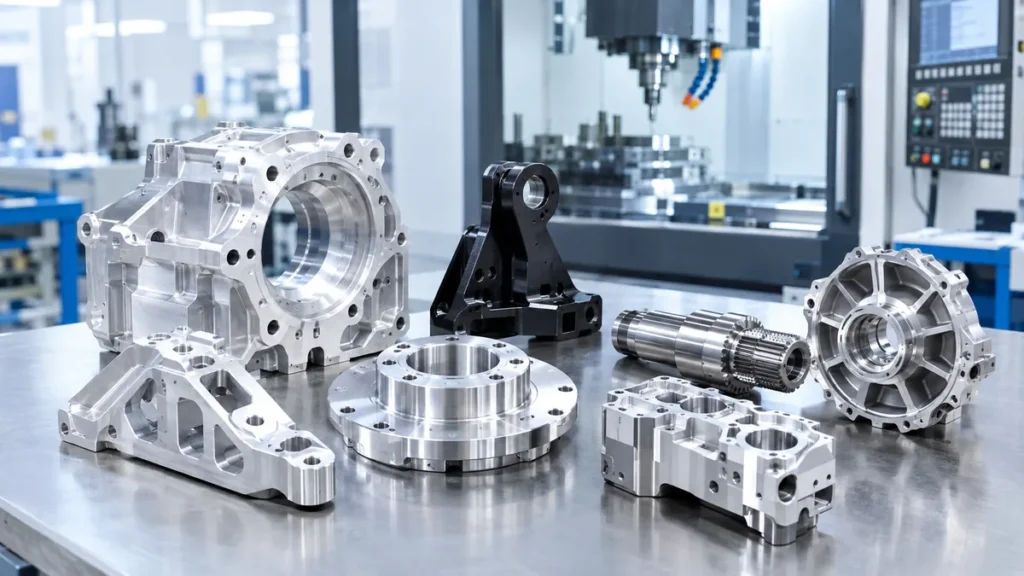
CNC machining covers diverse automotive use cases, from functional prototypes and custom replacement hardware to OEM production components.
Typical automotive CNC machined parts include:
- Engine components: Custom housings, mounting brackets, spacers and precision fittings
- Transmission & drivetrain parts: Shafts, adapters, couplings and gearbox housings
- Suspension & steering components: Mounting blocks, brackets, bushings and precision interfaces
- Electric vehicle components: Motor housings, battery brackets, cooling plates and connector enclosures
- Performance auto parts: Throttle body parts, intake adapters, lightweight brackets and custom fittings
- Interior & exterior hardware: Mounting fixtures, adjustment mechanisms and specialty trim components
- Prototyping parts: Functional test pieces for fit checks, validation and R&D development
Component suitability depends on vehicle systems, load conditions, industry regulations and validation standards. Safety-critical automotive parts require extra engineering review and strict inspection protocols.
Material Selection for Automotive CNC Parts
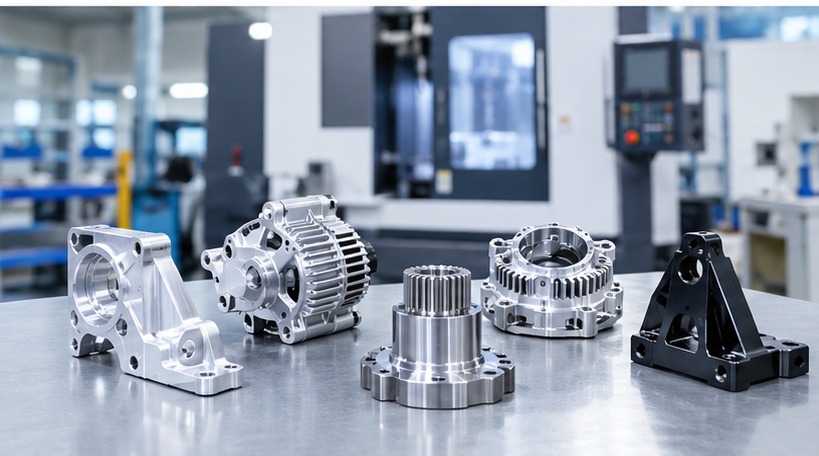
Material choice directly impacts part weight, mechanical performance, machinability and total manufacturing cost. You need to consider operating temperature, mechanical loads, chemical exposure and working environment when selecting materials.
Aluminum alloys are widely preferred for lightweight applications with good machinability. They work well for motor housings, brackets and adapters. CNC machined aluminum auto parts reduce overall component mass while retaining required stiffness if properly engineered.
Carbon steel and stainless steel deliver superior tensile strength, wear resistance or corrosion resistance. They are commonly used for shafts, fixtures, mounting interfaces and components under heavy mechanical stress.
PEEK, a premium high-performance plastic, offers outstanding chemical resistance and thermal stability. It fits electrical insulation parts, selected under-hood components and lightweight precision assemblies.
POM (acetal) features excellent dimensional stability and low friction. It is widely used for gears, bushings, guides, clips and other non-structural mechanical parts.
Other available materials such as brass and engineered plastics suit connectors, fittings and specialty custom applications. The final material selection must align with drawing specifications and service conditions.
CNC Machining for Automotive Prototyping vs Low-Volume Production
Automotive prototype machining allows engineering teams to test part fit, functionality and manufacturability before committing to mass production. CNC prototypes are manufactured straight from CAD files, helping teams detect design flaws early and shorten development cycles.
For low-to-medium batch orders, CNC machining removes the high upfront tooling cost required by molding, forging or casting. It also easily accommodates design revisions across different vehicle platforms.
Production planning still matters. Material lead time, machining complexity, surface finishing and inspection requirements all affect unit pricing and delivery schedules. For high-volume projects, we can recommend hybrid or alternative manufacturing processes after cost and performance evaluation.
Involving your machining supplier at the early design stage helps simplify complex features, reduce fixture setups and improve DFM (design for manufacturability).
Key Tolerance & Quality Requirements for Automotive Parts
Automotive components must strictly follow dimensional and functional requirements defined in engineering drawings. Critical features include bore diameters, hole positions, flatness, concentricity and mating surfaces.
Not every dimension needs ultra-tight tolerances. Overly strict tolerances unnecessarily raise machining and inspection expenses. A DFM review sets reasonable tolerance values based on assembly function and performance targets.
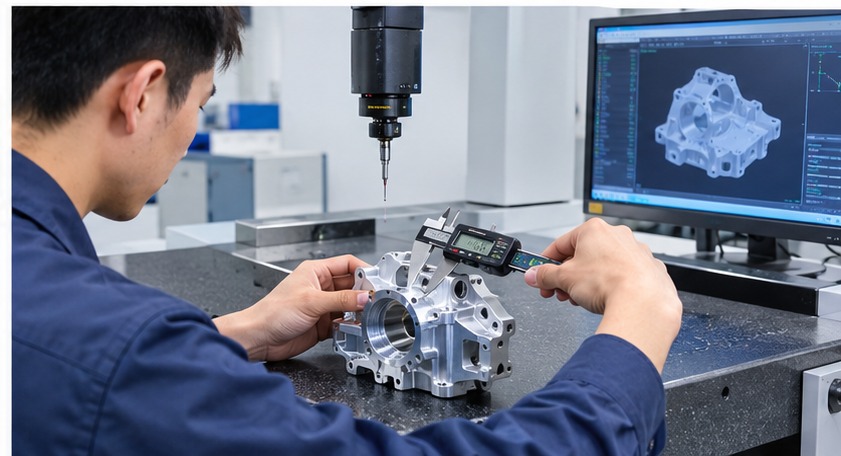
Quality assurance services may include dimensional inspection, CMM measurement reports, material certifications, surface finish validation and full part traceability, based on project needs.
IATF 16949 is the core quality management standard for automotive supply chains. Buyers should confirm a supplier’s certification status and verify whether their quality procedures match project contractual requirements. Certification alone cannot guarantee every finished part meets drawing specs.
Conclusion
Trusted automotive components rely on proper material selection, precision machining and rigorous quality control. From early-stage prototyping to low-medium volume manufacturing, CNC machining gives automotive engineers and OEM buyers a flexible way to build custom parts matching unique design requirements.
If you need custom automotive CNC components, submit your RFQ to our engineering team. Share your CAD files, 2D drawings, material specs, target tolerances and order quantities to get a detailed quotation for your automotive CNC machining project.
FAQ: Automotive CNC Machined Parts
- What automotive parts can CNC machining produce? CNC machining manufactures engine housings, drivetrain adapters, suspension brackets, EV motor components and custom prototype parts. The feasibility depends on part geometry, material, mechanical loads and tolerance requirements.
- What are the most common materials for automotive CNC machined parts? Top materials are aluminum alloys, carbon steel, stainless steel, PEEK and POM. Aluminum reduces weight; steel delivers strength; PEEK handles high heat/chemical exposure; POM works for low-friction mechanical parts.
- What documents do I need to request a CNC machining quote for automotive parts? Prepare 2D engineering drawings or 3D CAD files, material & surface finish specs, critical tolerances, order quantity and delivery timeline. Highlighting critical dimensions helps us assess manufacturability, cost and lead time accurately.


