
Brass is widely adopted in precision manufacturing thanks to its outstanding machinability, good electrical conductivity, corrosion resistance and stable dimensional performance. For mechanical engineers and sourcing managers, brass CNC machining is a reliable solution to manufacture high-precision connectors, valve parts, fluid fittings and other functional hardware.
Selecting the proper brass alloy and optimized machining strategy helps you keep production costs under control while meeting tight tolerance and surface finish requirements for complex assemblies. This handbook covers core material properties, machining pitfalls and practical design guidelines for custom CNC brass components.
Definition
Brass refers to copper-zinc alloys, whose mechanical and chemical characteristics change based on alloy ratios and temper conditions. Different grades deliver distinct balances of machinability, tensile strength, corrosion resistance and electrical performance.
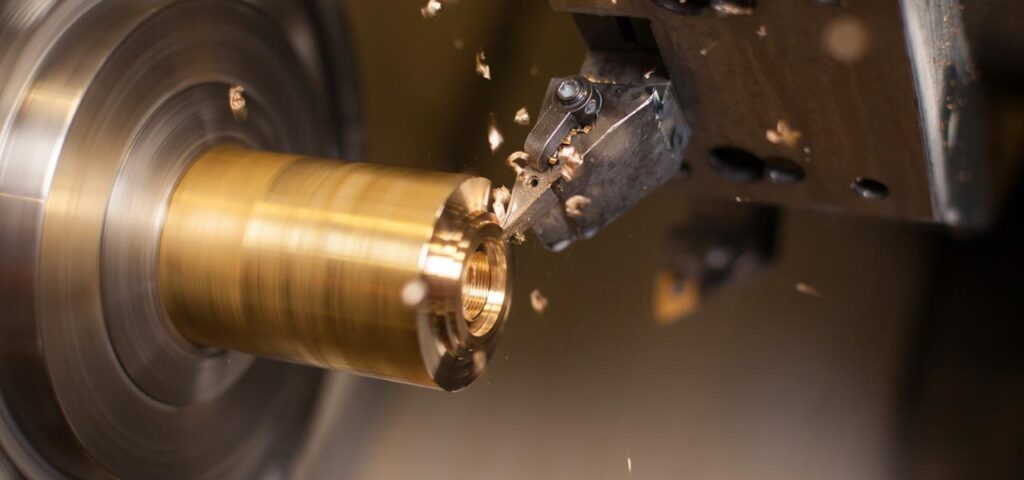
In CNC subtractive manufacturing, brass can be processed via turning, milling, drilling, tapping and other cutting operations. It forms clean chips and creates low cutting resistance, making it ideal for intricate features and miniature precision parts.
Free-cutting brass C36000 is the industry standard for high-volume, efficient CNC production. Engineers may pick alternative grades when corrosion resistance, formability or compliance rules are higher priorities.
How It Works
Brass CNC machining starts from a validated CAD model and material grade selection. CAM software converts digital designs into toolpaths, defining cutting sequences, tool selection, feeds and speeds.
CNC turning is used for round, cylindrical parts; CNC milling handles flat surfaces and irregular profiles; combined mill-turn operations are adopted for parts with mixed features.
Standard workflow:
- Material preparation: Source brass bar stock, plates or blanks matching the selected alloy grade
- Rough machining: Remove excess stock and establish the basic geometry
- Feature machining: Drill holes, cut threads, grooves, slots and sealing profiles
- Finishing passes: Hit target dimensions, tolerances and surface roughness
- Dimensional inspection: Verify critical dimensions, threads and surface conditions
- Deburring & cleaning: Critical for fluid channels, electrical contacts and tiny internal passages
Key Parameters
表格
| Parameter | Typical consideration | Manufacturing impact |
|---|---|---|
| C36000 Free-cutting brass | Best machinability | First choice for turned parts & high batch production |
| C26000 Cartridge brass | Higher copper percentage | Preferred for forming and improved corrosion resistance |
| Electrical conductivity | Determined by alloy composition | Essential for terminals and conductive contact parts |
| Cutting tools | Sharp, well-ground tool geometry | Maintain sharp edges and consistent surface finish |
| Cutting parameters | Feeds & speeds matched to alloy and geometry | Affect tool life, chip quality and dimensional stability |
| Surface finish | Defined by functional needs | Impacts sealing, electrical contact and cosmetic appearance |
| Quality inspection | Dimensional + functional verification | Ensure all critical drawing requirements are fulfilled |
There is no universal cutting setting. Process parameters should be finalized based on material datasheets, tooling recommendations, machine capability and small production trials.
Pros & Cons
✅ Advantages
- Excellent machinability: Free-cutting grades run fast for turning, drilling and milling
- Good electrical conductivity: Perfect for terminals, contact pins and conductive fittings
- Reliable corrosion resistance: Works well for indoor, pneumatic and general plumbing environments
- Premium as-machined surface quality: Easy to achieve smooth, clean surfaces
- High design freedom: Supports fine threads, narrow grooves, micro holes and complex profiles
⚠️ Limitations
- Higher material cost compared with ordinary carbon steel
- Alloy performance varies greatly between grades
- Risk of dezincification corrosion under harsh chemical or wet environments
- Designers need to evaluate material compatibility, working temperature, pressure and lead content compliance rules
Typical Applications
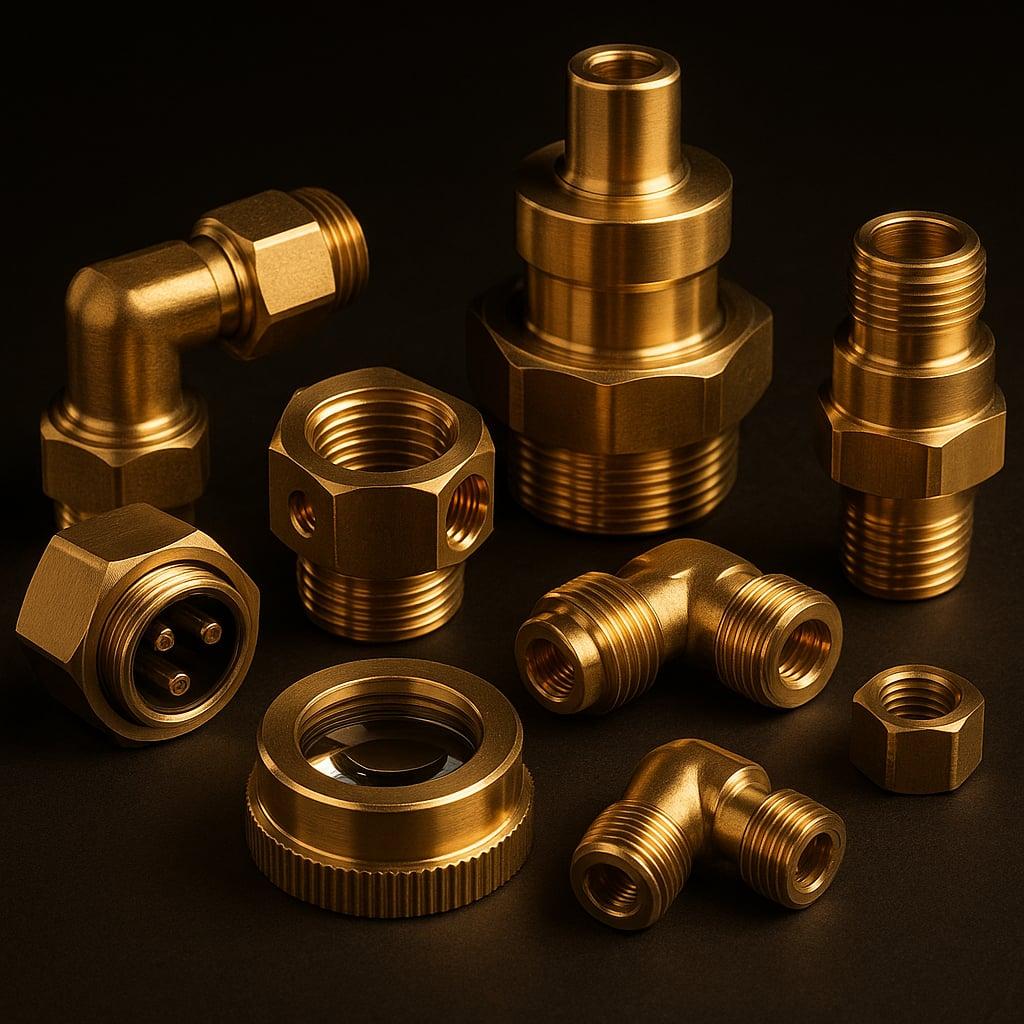
- Electrical connectors: Terminals, contact pins, connector shells and conductive housings
- Valve components: Valve stems, seats, internal inserts and precision flow control parts
- Fluid fittings: Threaded adapters, couplings, hose connectors and plumbing interfaces
- Industrial automation: Sensor adapters, pneumatic fittings and compact mechanical joints
- Precision instrumentation: Small housings, adjustment assemblies and micro turned components
Design & Machining Tips
- Specify brass grade clearly: Choose based on machinability, conductivity, corrosion exposure and compliance standards
- Avoid overcomplicating designs: Use standard drill sizes and thread specs whenever possible
- Reserve tool access space: Leave sufficient clearance for cutters, especially for deep pockets and internal undercuts
- Manage thin-wall features: Thin sections are prone to clamping distortion; confirm wall thickness with your manufacturer early
- Only apply tight tolerances to functional mating, sealing or contact surfaces
- Plan deburring in advance: Cross holes, slots and intersecting passages often require secondary edge finishing
- Clarify post-treatment requirements: Add polishing, plating or coating notes on drawings if needed
For prototype and low-volume brass parts, share your drawing with the CNC supplier at the design stage. Early reviews on material availability, tool access, tolerance stack-up and finishing help reduce revision rounds and shorten lead time. As a CNC factory based in China, we deliver custom precision brass machined parts with strict inspection standards.
FAQ
- What is the best brass grade for CNC machining? C36000 free-cutting brass is the most popular option thanks to its superior machinability. The final selection still depends on conductivity requirements, working environment, mechanical load and relevant industry regulations.
- Is brass suitable for electrical connectors? Yes. Brass has good electrical conductivity and is widely used for connector bodies and contact terminals. Select the correct alloy and plating according to your electrical and environmental requirements.
- Can brass CNC machining achieve a smooth surface finish? Yes. Brass can reach very smooth as-machined surfaces. Results are controlled by tool sharpness, cutting parameters, workholding strategy and finishing operations.


