
Choosing the correct aluminum alloy is a foundational decision for CNC machining. Material selection directly impacts part strength, machinability, dimensional stability, corrosion resistance and overall production cost. Among the most widely used aluminum grades, 6061 and 7075 are both popular for precision custom components, yet they serve very different engineering needs.
6061 delivers balanced strength, reliable corrosion resistance, good weldability and easy machining. 7075 stands out for its outstanding strength-to-weight ratio, making it the go-to choice for high-load structural and aerospace parts. Understanding the difference between 6061 and 7075 aluminum CNC machining helps designers, mechanical engineers and sourcing teams pick the right material for their project. This guide compares mechanical performance, machining behavior, corrosion performance, cost and typical applications.
1. What Is Aluminum 6061?
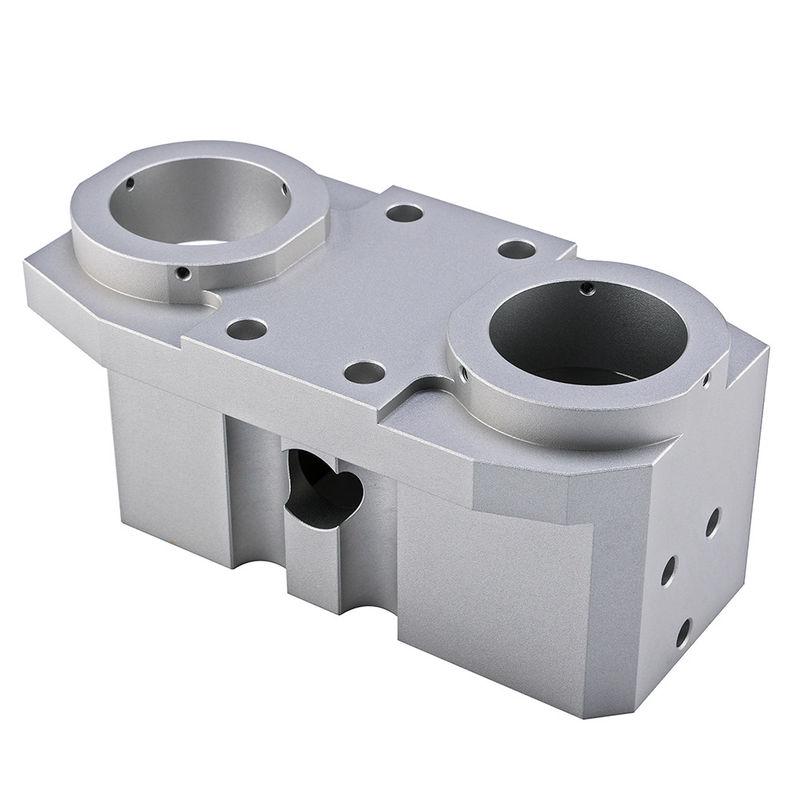
6061 is a precipitation-hardened 6000-series aluminum alloy alloyed with magnesium and silicon. It is the workhorse material for general CNC precision manufacturing. Its balanced properties suit machine brackets, electronic enclosures, automotive parts, heat sinks and automation assemblies. The most common tempers for machining are 6061-T6 and stress-relieved 6061-T651.
Key benefits of 6061
- Good all-round mechanical strength for standard structural use
- Excellent machinability for milling, turning, drilling and tapping
- Strong atmospheric corrosion resistance
- Good weldability with standard welding processes
- Stable, consistent anodizing results
- Lower raw material cost and widespread stock availability
Typical applications Mounting brackets, equipment housings, heat sinks, electronic enclosures, mechanical fixtures, general automation components.
2. What Is Aluminum 7075?
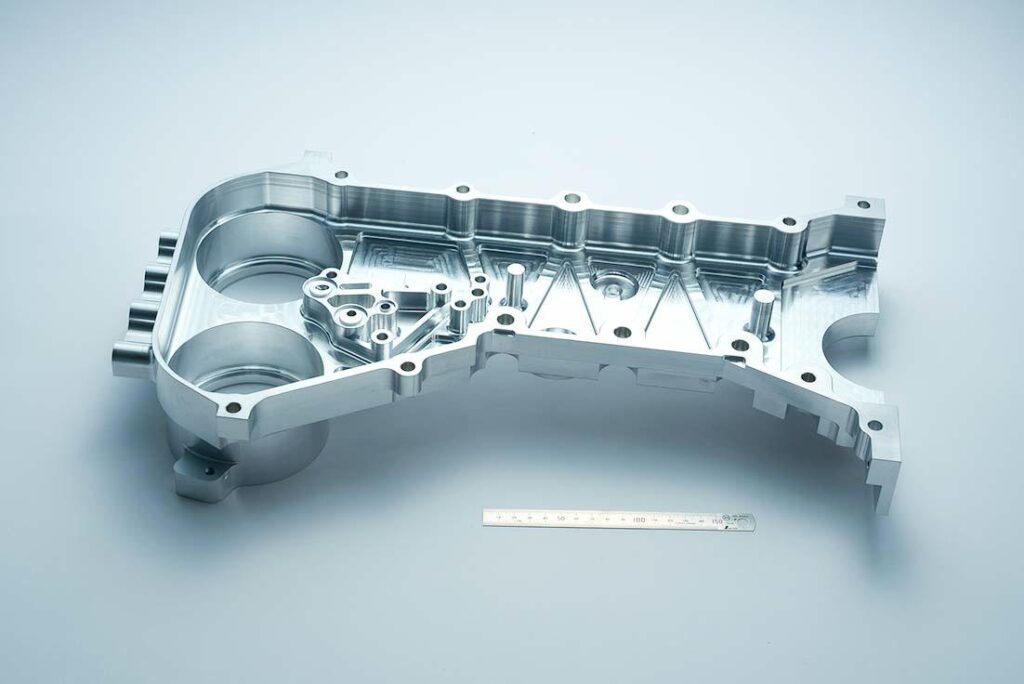
7075 is a high-strength 7000-series aluminum with zinc, magnesium and copper as its primary alloying elements. It delivers far higher tensile and yield strength than 6061 in T6 temper, ideal for lightweight load-bearing structures. Common machining tempers are 7075-T6 and stress-relieved 7075-T651.
Key benefits of 7075
- Industry-leading tensile and yield strength
- High hardness and deformation resistance
- Great strength-to-weight ratio for weight-critical designs
- Good machinability with proper tooling and cutting parameters
Limitations Weaker corrosion resistance; prone to stress corrosion cracking in harsh environments. Fusion welding is not recommended due to cracking risk. Raw material cost is higher than 6061.
Typical applications Aerospace fittings, aircraft structural brackets, high-performance automotive parts, lightweight structural assemblies, heavy-load fixtures, sports equipment.
3. Mechanical Property Comparison
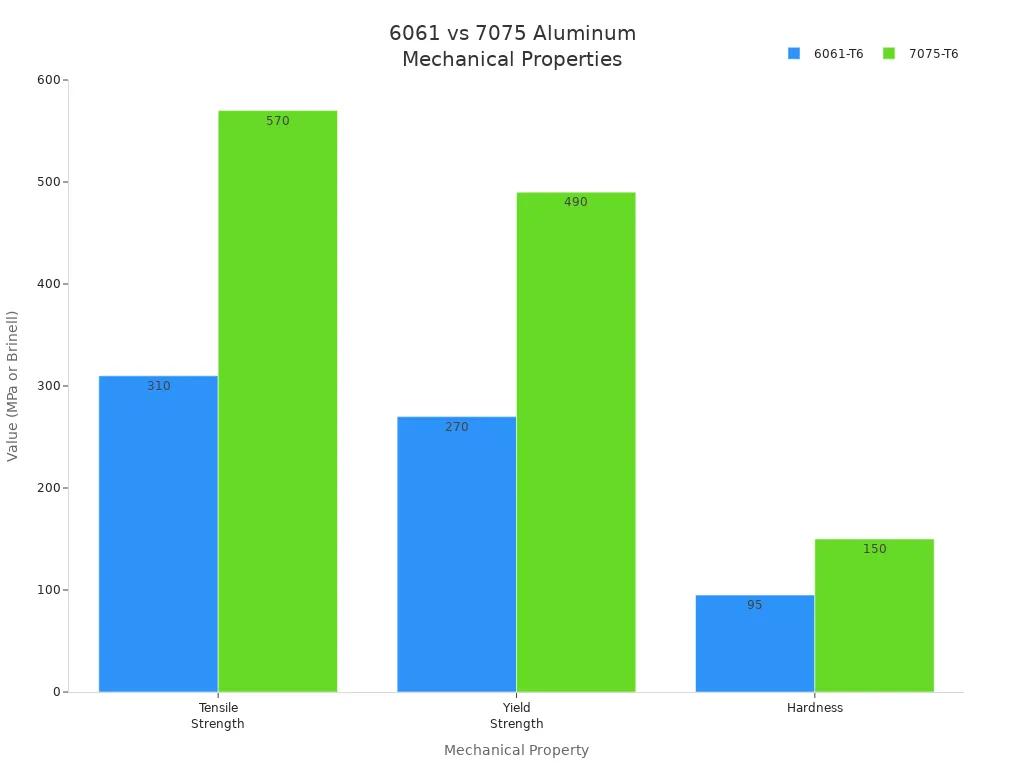
The biggest distinction between these two alloys is raw mechanical strength. Below are typical reference values for 6061-T6 vs 7075-T6:
表格
| Property | Aluminum 6061-T6 | Aluminum 7075-T6 |
|---|---|---|
| Ultimate tensile strength | ~310 MPa | ~572 MPa |
| Yield strength | ~276 MPa | ~503 MPa |
| Density | ~2.70 g/cm³ | ~2.81 g/cm³ |
| Brinell Hardness | ~95 HB | ~150 HB |
| Elastic Modulus | ~69 GPa | ~72 GPa |
| Corrosion resistance | Good to excellent | Moderate, environment-dependent |
| Machinability | Excellent | Good to very good |
| Weldability | Good | Poor |
| Anodizing finish | Consistent | Possible, color variation common |
| Relative material cost | Lower | Higher |
Note: These are reference values. Actual performance depends on temper, stock form, thickness and material certification. Always verify material test reports for critical designs.
Strength & Load Capacity
7075’s yield and tensile strength are nearly double that of 6061. This allows engineers to reduce section thickness while retaining load capacity for weight-sensitive parts. Important note: 7075’s elastic modulus is only slightly higher than 6061. If your issue is deflection, reworking part geometry or adding ribs will usually outperform simply switching to 7075.
Hardness & Wear
7075 is harder and more resistant to indentation. That said, base alloy hardness alone does not guarantee wear resistance. For sliding friction and abrasion, hardcoat anodizing or other surface treatments are still required.
4. CNC Machining Characteristics
Both alloys support 5-axis milling, turning and precision tapping, but their cutting behavior differs.
- 6061: Very forgiving. Lower cutting force, clean chip flow, wide tool compatibility, fast cycle times and stable surface finishes. It is the preferred option for prototyping and low-complexity production.
- 7075: Also machines well and can achieve fine surface finishes, but higher strength creates higher cutting loads. It requires rigid fixturing, sharp carbide tools, optimized feeds/speeds and coolant management to avoid tool wear and chatter.
Dimensional Stability
Both alloys can hold tight tolerances when properly processed. Residual stress is the main risk for distortion. 7075-T651 and 6061-T651 are stress-relieved plate grades, strongly recommended for thin-wall parts, deep pockets and flatness-critical components.
5. Corrosion Resistance & Surface Finishing
6061 has superior natural corrosion resistance and performs well outdoors without heavy coating. It anodizes evenly, delivering repeatable black, clear and hardcoat finishes. 7075 is more vulnerable to corrosion and stress corrosion cracking. Anodizing is possible, but color consistency is harder to control. For outdoor or corrosive environments, protective coating is mandatory.
Common finishing options: Type II anodizing, Type III hardcoat anodizing, powder coating, conversion coating. Masking threads, sealing surfaces and contact features is required for precision parts.
6. Cost Considerations
6061 is cheaper and easier to source in bar, plate and extrusion stock. It also tends to lower machining cost thanks to faster, more stable cutting. 7075 commands higher material pricing and may demand slower cutting parameters, tighter inspection and premium material certifications for aerospace jobs. When comparing total cost, evaluate the full assembly: a lighter 7075 structure may save system-level weight cost, while 6061 is the economical default for non-high-load parts.
7. Material Selection Guide
Choose 6061 when:
- Balanced strength and corrosion resistance are needed
- Welding or secondary assembly joining is required
- Cost control is a priority
- You need consistent, high-quality anodized cosmetic surfaces
- Parts are general machinery housings, brackets, heat sinks
Choose 7075 when:
- High tensile/yield strength is the core requirement
- Lightweight high-load structural design is the goal
- Welding is not required and corrosion protection can be added
- Applications include aerospace, high-performance fixtures and load-critical brackets
表格
| Application | Recommended Alloy | Reason |
|---|---|---|
| General machine housings | 6061 | Balanced performance & low cost |
| Electronic enclosures | 6061 | Good corrosion & finishing |
| Heat sinks | 6061 | Strong thermal conductivity |
| Aerospace structural parts | 7075 | Superior strength-to-weight |
| High-load brackets | 7075 | Higher yield strength |
| Welded assemblies | 6061 | Reliable weldability |
| Outdoor industrial components | 6061 | Better natural corrosion resistance |
8. Critical Design Checklist
Before locking material on drawings, confirm:
- Operating load type: static, cyclic, bending or shear
- Weight reduction targets
- Exposure environment: moisture, salt spray, chemicals
- Part geometry: thin walls, deep cavities, tight tolerance requirements
- Specify temper, not just alloy (6061-T651 vs 6061-T6 makes a big difference)
- Finish requirements and masking plan for critical features
Conclusion
There is no universal “better” alloy between 6061 and 7075. 6061 is the versatile, cost-effective option for general industrial CNC parts with good corrosion resistance, weldability and easy finishing. 7075 is the premium high-strength choice for lightweight, heavily loaded structural components like aerospace fittings. The right selection depends on load requirements, environment, tolerance rules and total project budget. Partnering with an experienced machining supplier helps align material selection, process planning and inspection. If you need reliable aluminum alloy precision CNC machining, qualified suppliers can support material consultation, prototype validation and consistent production.
Frequently Asked Questions (FAQs)
- What is the main strength difference between 6061 and 7075? 7075 aluminum delivers substantially higher tensile and yield strength. Typical 6061-T6 reaches ~310 MPa tensile / 276 MPa yield, while 7075-T6 reaches ~572 MPa tensile / 503 MPa yield. This makes 7075 ideal for high-load structural components, while 6061 suits general-purpose mechanical assemblies.
- Which aluminum grade is easier for CNC machining? 6061 is easier and more forgiving to machine. It has moderate hardness, stable chip formation and broad tool compatibility. 7075 can produce excellent surface finishes, but its higher strength increases cutting forces and tool wear, requiring stricter cutting parameter control. For most standard CNC projects, 6061 delivers simpler, lower-cost machining.
- Which alloy is better for structural load-bearing components? 7075 is preferred for high-load structural parts thanks to its much higher yield strength. It resists permanent deformation under heavy stress. That said, 6061 remains suitable for moderate structural loads, especially when welding, corrosion resistance or lower manufacturing cost are priorities. Final selection needs to account for fatigue, safety factor, corrosion exposure and joining method.


