
Introduction
Stainless steel 316L is widely used in CNC machining because of its excellent corrosion resistance, good toughness, and suitability for demanding industrial and medical applications. Compared with standard 316 stainless steel, its lower carbon content provides better resistance to carbide precipitation during welding.
For manufacturers producing medical instruments, marine fittings, chemical equipment, and precision mechanical components, 316L stainless steel CNC machining offers a reliable combination of durability and corrosion resistance.
However, 316L is not the easiest material to machine. Its tendency to work-harden, relatively low thermal conductivity, and high cutting forces require appropriate tooling and machining strategies.
This guide covers its material properties, machining challenges, common applications, and design considerations.
1. Key Properties of 316L Stainless Steel
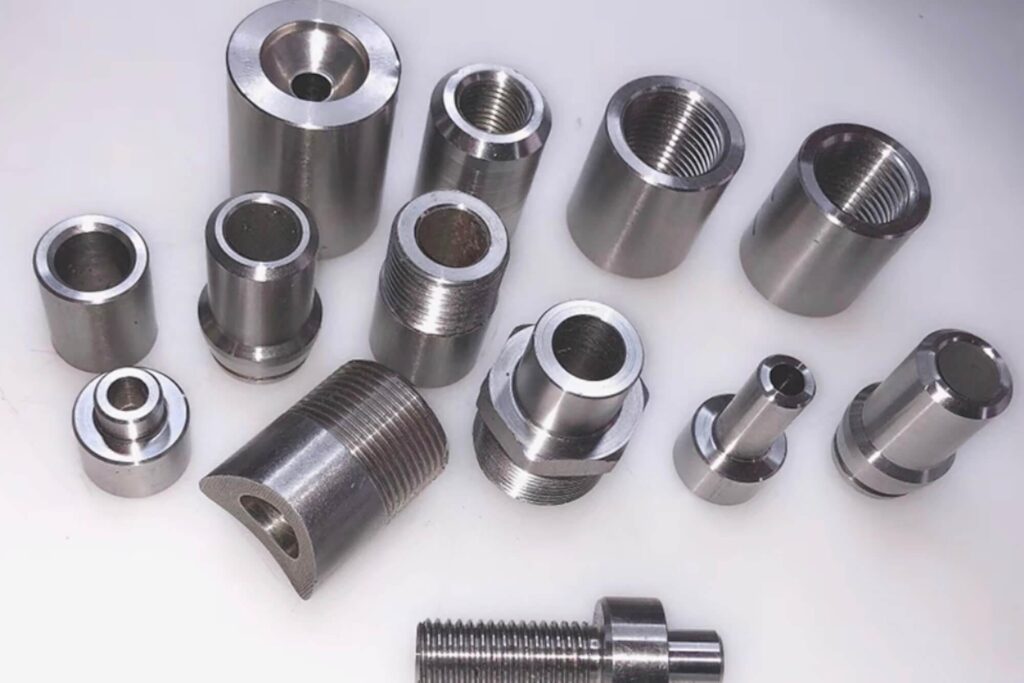
316L is an austenitic stainless steel containing chromium, nickel, and molybdenum. The molybdenum improves resistance to pitting and crevice corrosion, particularly in chloride-containing environments.
| Property | Typical characteristics |
|---|---|
| Corrosion resistance | Excellent in many industrial environments |
| Carbon content | Maximum 0.03% |
| Chromium | 16–18% |
| Nickel | 10–14% |
| Molybdenum | 2–3% |
| Density | Approximately 8.0 g/cm³ |
| Machinability | Moderate to difficult |
| Magnetic properties | Generally non-magnetic when annealed |
316L is suitable for applications requiring corrosion resistance, cleanliness, and long-term material stability. However, it is not immune to chloride pitting or crevice corrosion, particularly in stagnant seawater and aggressive chemical environments. 卡彭特科技+2
2. 316 vs 316L Stainless Steel: What Is the Difference?
The main difference between 316 and 316L is carbon content.
| Comparison | 316 Stainless Steel | 316L Stainless Steel |
|---|---|---|
| Maximum carbon | 0.08% | 0.03% |
| Corrosion resistance | Very good | Very good |
| Weldability | Good | Better resistance to weld sensitization |
| Machinability | Similar | Similar |
| Typical applications | Industrial fittings, shafts | Medical parts, welded equipment |
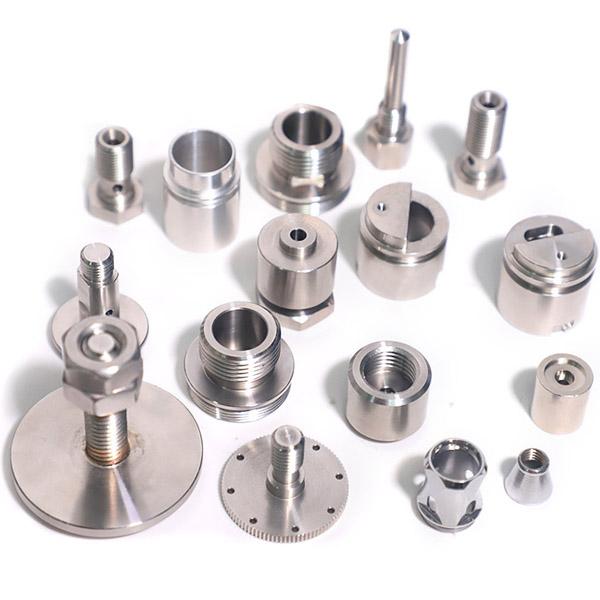
The lower carbon content of 316L reduces the risk of chromium carbide precipitation during welding and subsequent intergranular corrosion.
For CNC-machined components that will not be welded, both grades can offer similar performance. Material selection should depend on the drawing, operating environment, and applicable specifications. Dual-certified 316/316L stock is also available. 卡彭特科技+1
3. Common Applications of 316L CNC Machined Parts
316L is used across industries where corrosion resistance, durability, and surface cleanliness are important.
Medical equipment
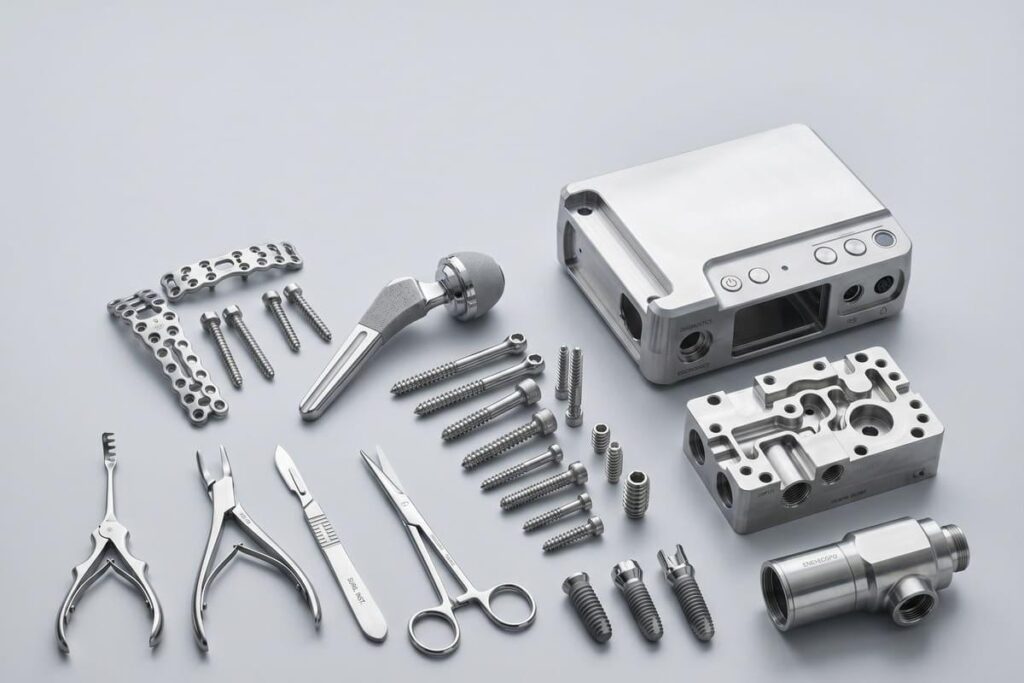
316L medical CNC parts include surgical instruments, equipment fittings, and selected implant components. Implant applications require material that meets relevant medical specifications, such as ASTM F138 or ISO 5832-1. Ordinary commercial 316L should not automatically be considered implant-grade. 卡彭特科技+1
Food and pharmaceutical equipment
316L is suitable for processing equipment, sanitary fittings, valves, and fluid-handling components because of its corrosion resistance and ability to achieve clean surface finishes.
Marine and chemical equipment
Typical applications include pump components, connectors, marine fittings, and chemical processing hardware. Its molybdenum content improves resistance to many chloride-containing environments, although severe seawater exposure still requires careful material evaluation.
4. Common Challenges in 316L CNC Machining
316L offers good service performance but requires careful machining control.
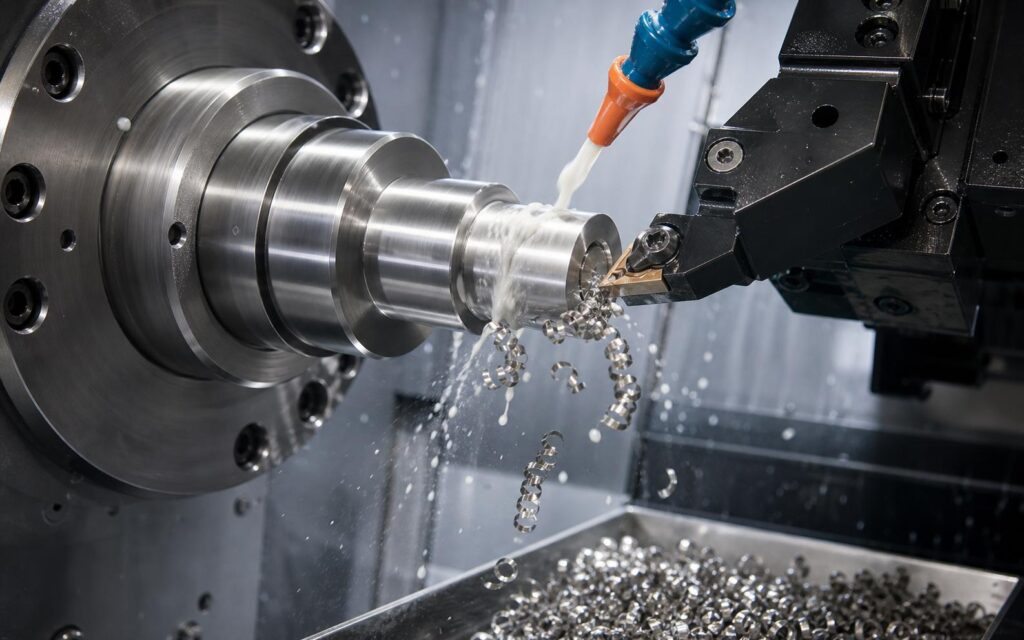
The main challenges include:
- Work hardening: Cutting pressure can harden the surface, making subsequent machining more difficult.
- Heat accumulation: Low thermal conductivity concentrates heat around the cutting edge.
- Tool wear: High cutting forces can accelerate insert wear and reduce tool life.
- Chip control: Long, continuous chips can interfere with machining and damage finished surfaces.
To improve machining results, manufacturers should use sharp carbide tools, maintain consistent feed rates, avoid unnecessary tool dwell, and apply suitable coolant.
Rigid workholding and optimized cutting parameters also help reduce vibration and improve dimensional consistency. Grade 316L (UNS S31603)+2
5. Design and Finishing Recommendations
A few practical considerations can improve the quality of corrosion resistant 316L machining:
- Avoid unnecessarily thin walls and deep narrow pockets.
- Use practical internal corner radii to reduce tool deflection.
- Specify tight tolerances only for functional features.
- Use appropriate cutting tools and stable workholding.
- Consider passivation or electropolishing when required by the application.
- Prevent contamination from carbon steel tools or workholding surfaces.
After machining, suitable cleaning and finishing processes help remove contaminants and improve surface condition. Passivation requirements should be defined according to the component’s service environment and applicable specifications.
For additional technical information, see 316L stainless steel precision CNC machining.
6. Frequently Asked Questions
1. What is the main difference between 316 and 316L stainless steel for CNC machining?
The main difference is carbon content. Standard 316 allows up to 0.08% carbon, while 316L allows up to 0.03%. The lower carbon content reduces carbide precipitation during welding and improves resistance to intergranular corrosion. Their machining characteristics are generally similar.
2. Is 316L suitable for medical implant components?
Yes, certain implant-grade 316L materials are used in medical implants. However, the material must meet applicable requirements such as ASTM F138 or ISO 5832-1. Standard commercial 316L is not automatically suitable for implantation. Biocompatibility, manufacturing controls, surface condition, and regulatory requirements must also be evaluated.
3. What challenges come with machining 316L stainless steel?
The main challenges are work hardening, heat accumulation, tool wear, and difficult chip control. Sharp cutting tools, stable workholding, consistent feed rates, and effective coolant application help improve machining efficiency and component quality.


