
Stainless steel CNC machining delivers corrosion resistance, high tensile strength and stable performance for industrial, medical and aerospace components. Its low thermal conductivity and tendency to work harden create unique machining challenges. This DFM handbook covers material grades, tolerance guidance, surface finish options and common pitfalls for stainless steel CNC prototypes and low-volume orders.
Definition
Stainless steel CNC machining is a subtractive manufacturing process that uses computer-controlled cutting tools to fabricate corrosion-resistant steel alloy parts with precise bores, threads, slots, sealing surfaces and complex geometries for demanding industrial use.
Stainless steel balances corrosion resistance, mechanical strength and cleanability, yet its machinability differs widely by grade. Austenitic grades 304 and 316 are the most common options. Both are ductile and prone to work hardening, and their low thermal conductivity creates extra cutting challenges.
304 stainless steel is widely used for general brackets, housings and standard equipment components. 316 stainless steel contains molybdenum, delivering superior resistance to pitting and crevice corrosion, making it ideal for parts exposed to moisture, salt and chloride environments. We are a China-based CNC precision shop specializing in low-volume stainless steel prototypes and custom machined parts for medical, automation, aerospace and e-bike projects.
How It Works
Stainless steel CNC machining converts CAD models into finished components via programmed cutting sequences and strict quality inspection.
- Material confirmation: Lock stainless steel grade, stock size and corrosion requirements.
- CAD & CAM setup: Define geometry, tolerances, datums and optimized toolpaths.
- Workholding: Clamp the workpiece rigidly to reduce vibration and deformation.
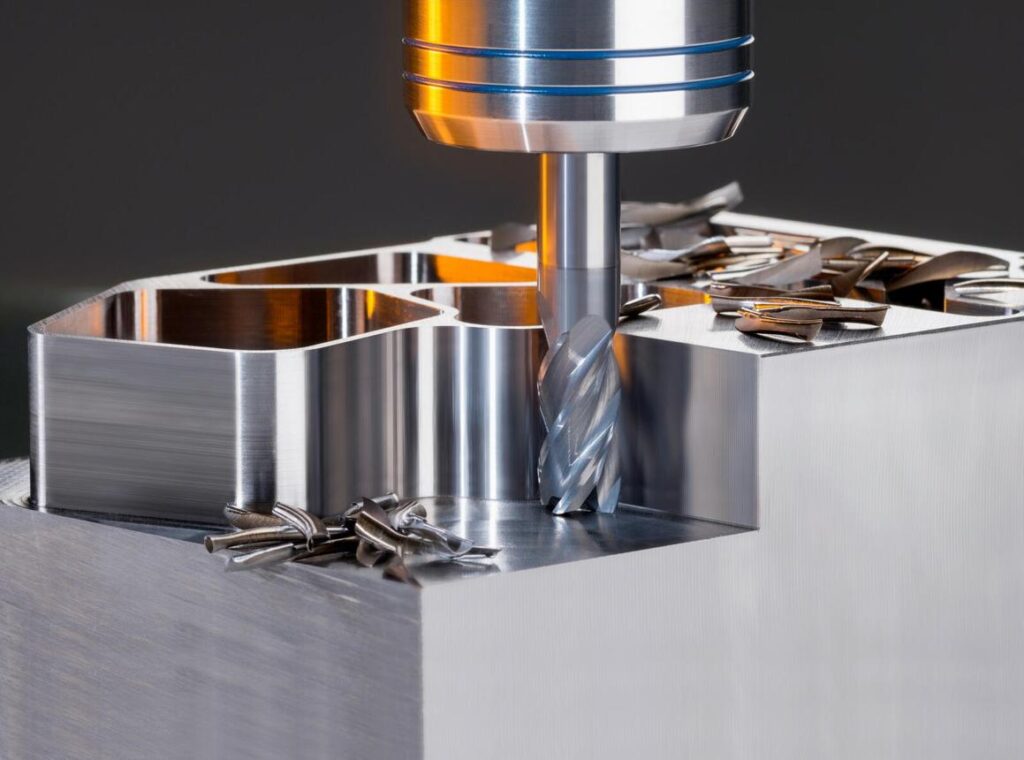
- Rough machining: Remove bulk stock with carbide cutters, prioritizing stable chip evacuation.
- Finish machining: Reach target dimensions and surface roughness with controlled finishing passes.
- Deburring & post-cleaning: Remove burrs and residual chips; apply secondary surface treatment as requested.
- Inspection: Validate critical dimensions, threads, surface finish and drawing requirements.
Process stability is critical. Stainless steel rapidly work-hardens if tools rub or dwell on the surface. Sharp cutting edges and consistent tool engagement help mitigate this issue.
Key Parameters
表格
| Parameter | Common consideration | Engineering guidance |
|---|---|---|
| Material grade | 304 or 316 stainless steel | Select based on corrosion exposure, strength and operating environment |
| Cutting tool | Sharp carbide tooling with proper coating & geometry | Match tool type to stainless grade and machining operation |
| Cutting speed | Dependent on tooling and machine setup | Follow tool manufacturer specs; reduce speed for unstable setups |
| Feed rate | Tied to tool engagement and feature type | Maintain steady cutting, avoid light rubbing passes |
| Coolant | Flood coolant / high-pressure coolant delivery | Dissipate heat and break up long, stringy chips |
| Surface finish | Defined Ra value or functional finish | Separate requirements for sealing, sliding fit or cosmetic appearance |
| Workholding | Rigid fixture support | Minimize chatter, especially for thin-wall stainless features |
| Inspection | Calipers, micrometer, CMM, surface roughness tester | Match inspection method to tolerance class |
No single cutting parameter works for all stainless steel parts. Final settings depend on alloy grade, tooling, machine rigidity, part geometry and order volume.
Pros & Cons
Advantages
- Excellent corrosion resistance for wet, chemical and hygienic working environments
- High mechanical strength and toughness for structural functional components
- Easy to clean, suitable for food, pharmaceutical and medical equipment
- High dimensional accuracy for tight-tolerance threads, sealing interfaces and complex features
- Flexible secondary finishing: polishing, passivation, bead blasting
Limitations
- Work hardening: Rubbing or shallow cuts harden the surface and make subsequent machining harder
- Built-up edge: Stainless material sticks to cutting edges, ruining consistency and surface quality
- Poor thermal conductivity: Heat concentrates at cutting zone and accelerates tool wear
- Stringy chips: Hard to break, may scratch finished surfaces and jam toolpaths
- Higher production cost: Faster tool wear, longer cycle time and extra finishing steps raise pricing
Typical Applications
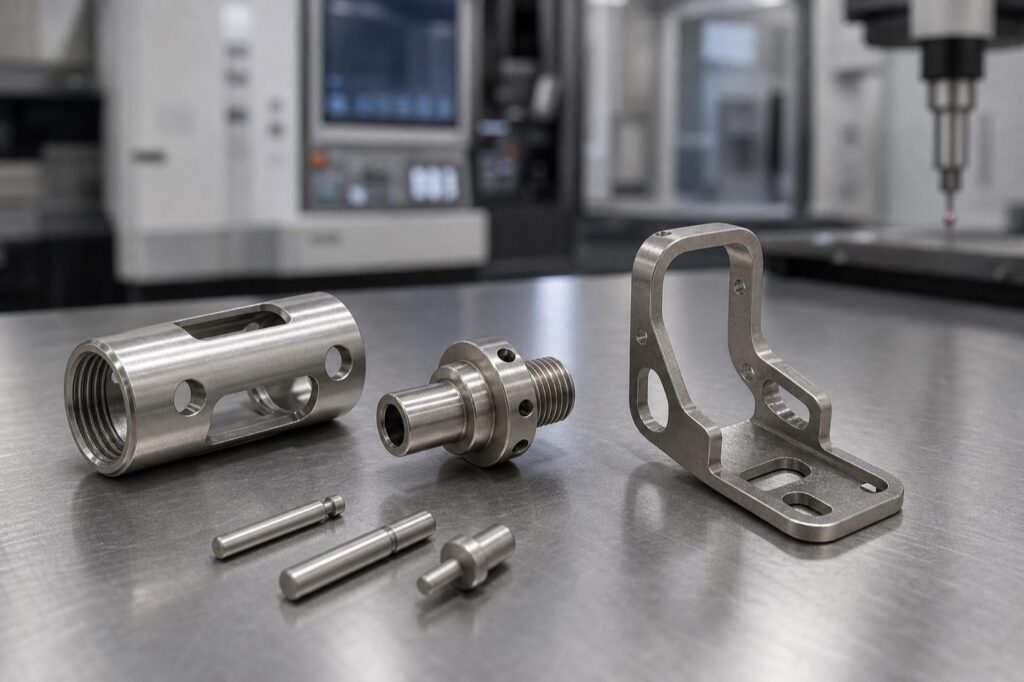
- Medical equipment: Instrument components, reusable fixtures, device housings
- Industrial automation: Sensor mounts, actuator parts, robot tooling and precision shafts
- Aerospace: Certified fittings, brackets and hardware with traceable material requirements
- Food & pharma machinery: Connectors, manifolds and washable process components
- E-bike & mobility: Corrosion-resistant fasteners, shafts and mounting hardware
- General engineering: Custom stainless prototypes, valve parts and assembly brackets
Keep in mind stainless steel is not fully corrosion-proof. Its performance depends on chloride concentration, temperature, gaps between mating surfaces and maintenance.
Design & Machining Tips
- Select grade by working environment: 304 for general use; 316 for salt, chloride and humid conditions
- Avoid tool dwell and repeated light skimming passes to stop work hardening
- Use fresh, sharp stainless-steel-specific carbide tools; replace cutters before finish degrades
- Build rigid fixturing to suppress vibration, especially for thin-wall stainless designs
- Choose chip-breaker tool geometry + sufficient coolant to prevent chip recutting
- Limit extremely deep pockets, narrow slots and sharp internal corners that raise machining difficulty
- Only specify polishing, passivation or tight Ra values when the function requires it
- Clarify critical dimensions, deburring standards and contamination rules before production
If you are developing low-volume stainless prototypes, work with an experienced CNC supplier to review DFM feasibility, grade selection and surface treatment options before manufacturing.
FAQ
Q: Which stainless steel grade is best for CNC machining?
A: 303 stainless steel is the easiest to machine, ideal for general turned parts. 304 is widely used for corrosion-resistant structural components. 316L offers superior saltwater corrosion resistance for marine and outdoor applications.

Q: Why is stainless steel hard to machine on CNC?
A: Stainless steel tends to work harden during cutting. Poor cutting speed, dull tools or excessive feed will cause surface hardening, rapid tool wear and poor surface quality.

Q: What tolerance can you hold for CNC stainless steel parts?
A: General features: ±0.10 mm. Hole locations and mating faces: ±0.05 mm. Precision bore and press-fit surfaces: ±0.02–0.03 mm. Tighter tolerances raise machining cost significantly.

Q: What surface finishes are available for CNC stainless steel?
A: Common options: as-machined, bead blasting, brushed finish, electropolishing and passivation. Passivation removes free iron and improves corrosion resistance.


