
Custom CNC machining empowers engineering teams to convert CAD designs into accurate, functional components without costly hard tooling investment. For OEMs, product developers and procurement managers, this manufacturing method validates designs, tests assemblies, and produces small batches before mass production.
A trusted CNC machining supplier supports the full workflow: material selection, Design for Manufacturability (DFM) review, precision machining and final dimensional inspection. This is critical for projects demanding tight tolerances, multiple material choices, and stable part quality across prototype iterations.
For companies sourcing custom CNC machining across North America and Europe, the ideal partner delivers engineering support, flexible order sizes, and a seamless transition from prototype validation to low-volume manufacturing.
Why Choose Custom CNC Machining for Prototypes and Small Batches?
Traditional manufacturing often requires custom molds, high upfront costs and long lead times. CNC machining offers a flexible alternative for accurately producing limited-quantity precision parts.
Shorter Product Development Cycles
CNC machining reads digital engineering files directly to build functional components, eliminating custom mold fabrication. Engineers can verify dimensions, assembly fit and mechanical performance before locking final designs.
When prototypes need revisions, you simply update the CAD model and machining program. This makes CNC perfectly suited for early-stage R&D and engineering validation.
Flexible Order Quantities
Low-volume CNC machining fits orders ranging from single prototypes to limited pilot batches. Our service accepts individual prototype orders with no minimum order requirement.
This flexibility helps manufacturers cut excess inventory risk for unvalidated designs. It also works for replacement parts and specialized machinery that cannot justify mass production.
Reliable Dimensional Accuracy
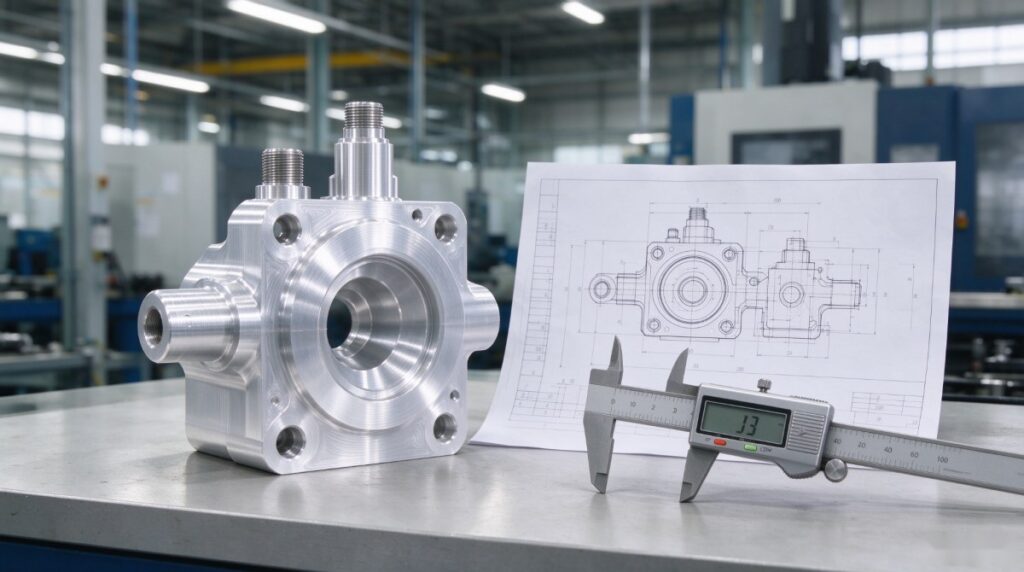
Precision CNC milling and turning fabricate complex geometries, precise mating surfaces and repeatable dimensions. Realistic achievable tolerances depend on material, part geometry, machining method and inspection standards.
For critical features, engineers should define functional tolerances on drawings instead of applying overly tight tolerances across all dimensions, which unnecessarily raises cost.
Materials Available for Custom CNC Machined Parts
Material selection impacts machinability, dimensional stability, service lifespan and total component cost. A qualified CNC supplier helps match materials to your part’s operating environment and functional requirements.
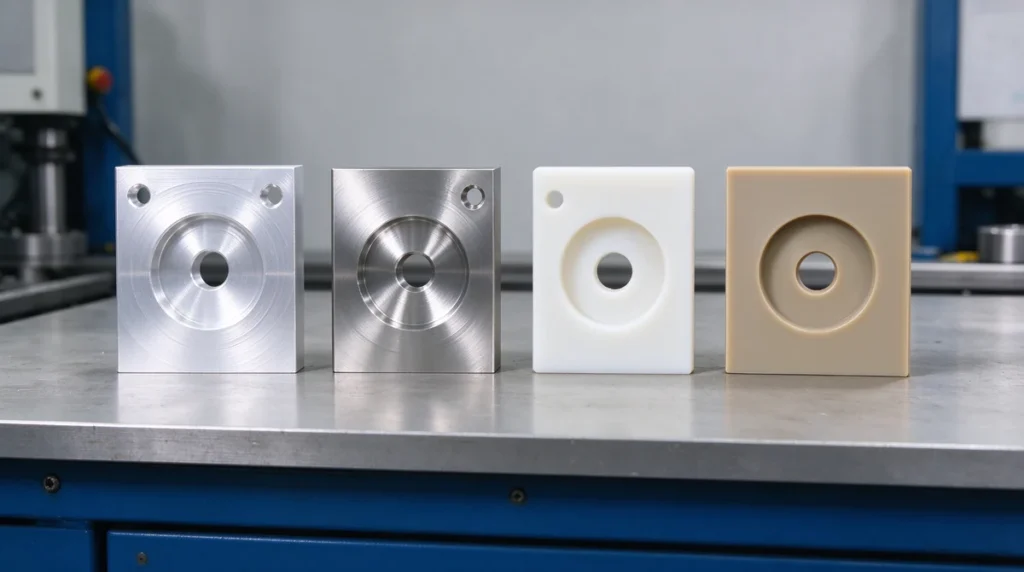
Aluminum
Aluminum alloys are widely adopted for lightweight structural housings, brackets and precision fixtures, balancing good machinability, strength and low weight.
Common use cases include automotive parts, robotics components, aerospace prototypes and industrial automation assemblies. Anodizing surface treatment can boost corrosion resistance and surface finish, based on alloy and application needs.
Stainless Steel
Stainless steel is selected for parts requiring corrosion resistance, high durability and superior mechanical strength vs aluminum.
CNC-machined stainless steel components serve medical devices, industrial machinery, fluid control systems and custom automotive assemblies. Alloy choice must match operating conditions and industry specifications.
POM Engineering Plastic
Polyoxymethylene (POM / Acetal) is a high-performance engineering plastic featuring low friction, stable dimensions and excellent machinability.
Typical applications: bushings, spacers, gears, guides and sliding moving components. POM reduces weight and friction where metal-on-metal contact is undesirable.
PEEK High-Performance Polymer
PEEK handles extreme environments requiring strong mechanical performance, heat resistance and chemical resistance.
It is widely used in specialized medical equipment, industrial machinery and high-performance engineering assemblies. Confirm material grade, operating conditions and regulatory rules before using PEEK for safety-critical components.
One-Stop CNC Machining from Design Review to Inspection
A one-stop CNC service removes the hassle of coordinating multiple vendors. Machining, surface finishing and quality inspection are handled by a single manufacturing partner for every order.
Design for Manufacturability Review
Before production, our engineering team reviews CAD files and technical drawings to flag features that increase machining difficulty or manufacturing risk.
DFM review covers:
- Wall thickness and machining deformation risks
- Internal corner radii and cutting tool accessibility
- Hole depth, thread specs and feature alignment
- Tolerance requirements for mating surfaces
- Material selection and post-processing needs
This review finds ways to simplify manufacturing while preserving your part’s intended function.
CNC Milling and Turning
CNC milling creates prismatic components, pockets, slots, mounting features and complex curved surfaces. CNC turning produces shafts, bushings, cylindrical housings and rotational parts.
Multi-axis CNC machining reduces repeated re-fixturing and improves positional accuracy of critical features. The proper machining process is selected based on drawing specs and part geometry.
Surface Finishing and Quality Inspection
Available finishing options: deburring, anodizing, bead blasting, polishing and custom treatments, subject to project requirements.
Dimensional inspection focuses on features controlling fit, function and performance. Depending on project specs, we use calipers, micrometers, gauges and CMM coordinate measuring machines.
Notify your supplier upfront if you need inspection reports, material certificates or full part traceability documentation.
CNC Machining Applications Across Multiple Industries
Custom CNC machining serves different vertical industries with unique engineering demands. The same manufacturing process builds lightweight structures, precision mating interfaces and custom small-batch components.
Automotive and Aerospace
Automotive projects often require brackets, housings, shafts, fixtures and prototype parts for performance validation. Aerospace development relies on lightweight structural parts, precision interfaces and functional prototypes.
Both industries demand clear drawing specs, proper material selection and traceable inspection records. Safety-critical aerospace components need extra supplier qualification and compliance documentation.
Medical Equipment
Medical device manufacturers use CNC machining for instrument parts, equipment brackets, test fixtures and custom mechanical assemblies.
Material biocompatibility, surface cleanliness, dimensional verification and traceability are core purchasing considerations. Parts intended for patient-contact or regulated medical use require additional compliance assessment.
Robotics and Industrial Automation
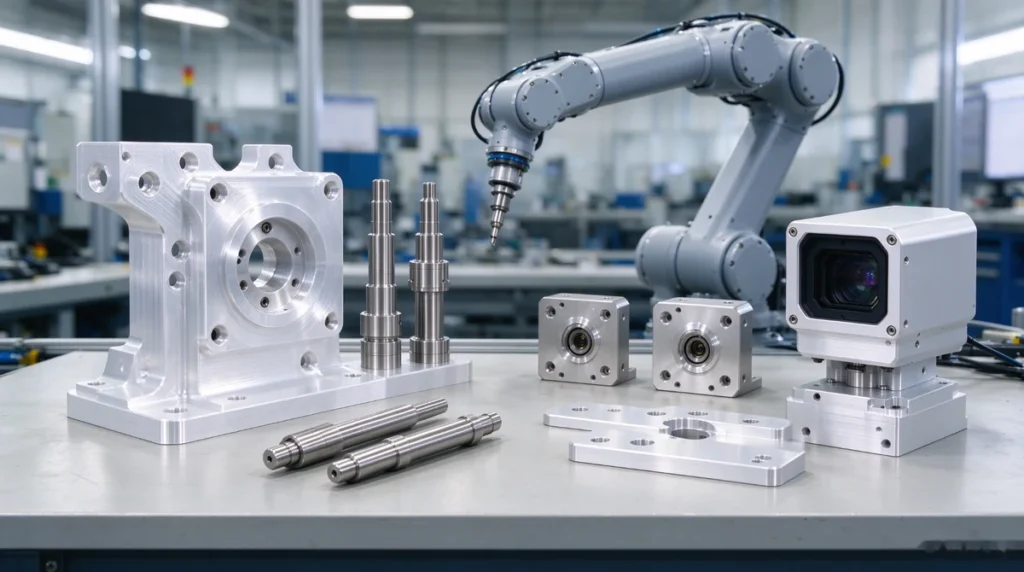
Robotics and automation equipment depend on precisely machined mounting plates, end effector parts, actuator interfaces, sensor brackets and custom fixtures.
Misaligned mating components lead to assembly errors and machine downtime. Accurate datums and reasonable positional tolerances guarantee seamless assembly and stable equipment operation.
How to Select a CNC Machining Supplier
The cheapest quote does not always equal the lowest total manufacturing cost. Buyers should evaluate a supplier’s engineering capability, communication standards, quality control and flexibility for design changes.
Evaluate Engineering Support
A qualified supplier can advise on material suitability, tolerance feasibility, machining strategy and design optimization. Smooth technical communication is vital for cross-timezone collaboration.
Confirm Quality & Delivery Requirements
Lock in these details before placing orders:
- Order quantity and lead time
- Drawing revision rules and acceptance criteria
- Critical dimensions and inspection standards
- Material grades and certification requirements
- Surface finish and post-processing specs
- Packaging, shipping and document requirements
Full information at quotation stage prevents miscommunication and unexpected extra costs.
Consider Total Project Cost
CNC pricing depends on material, setup time, part complexity, tolerances, finishing and inspection. A manufacturable design may reduce overall cost even if raw material costs are slightly higher.
For low-volume projects, confirm your supplier can retain approved design and process data for repeat orders to maintain consistent quality for future batches.
How to Request an Accurate CNC Machining Quote
Precise quotations rely on complete engineering data. Prepare these files and specs so manufacturers assess feasibility and calculate pricing:
- 3D CAD model in STEP format
- 2D dimensioned PDF drawing with tolerances
- Material grade and surface finish requirements
- Prototype quantity and potential repeat order volume
- Critical functional specs and inspection demands
- Target lead time and shipping destination
If your design is still in development, clarify which dimensions are critical and which features can be adjusted. Our team can suggest practical design improvements without hurting part performance.
Our free DFM review identifies manufacturing risks before production starts, cutting unnecessary complexity and machining expenses.
FAQ
- Is there a minimum order quantity for custom CNC machining? MOQ varies by manufacturer. We accept single-piece prototype orders with no formal minimum quantity. Setup, programming and inspection fees will make one-off prototypes have a higher per-unit cost compared to larger batches.
- What tolerances can CNC machining achieve? Achievable tolerance depends on material, part geometry, machining process and inspection tools. Tight tolerances are available for critical features, but must be reviewed case by case. List critical dimensions on drawings and confirm feasibility before production.
- Which file formats should I submit for a CNC machining quote? STEP files for 3D geometry; dimensioned PDF 2D drawings to define tolerances, threads and surface finish requirements. Native CAD files may also be accepted.
- Can one supplier handle prototypes and low-volume production? Yes. A supplier with proper machining capacity and process controls can support prototype iterations, pilot batches and ongoing low-volume orders. Confirm quality documentation standards as order volumes scale up.
- How can I reduce the cost of custom CNC machined parts? Optimize tolerance specs, simplify non-critical features, select easy-to-machine materials and minimize repeated setups. Consolidate operations and clarify inspection scope. A pre-production DFM review is the most effective way to cut manufacturing costs.
Request a CNC Machining Quote for Your Next Project
Whether you need a single functional prototype or a small batch of precision components, our CNC team turns your design into manufacturable parts.
We deliver custom CNC parts in aluminum, stainless steel, POM and PEEK, supporting flexible quantities, professional DFM review and full dimensional inspection based on your project needs.
Upload your CAD drawings today to get a free DFM analysis and CNC quotation. Share your material, quantity, tolerance and finishing specs so our engineers evaluate your design and recommend the best manufacturing solution.


